Plot Summary
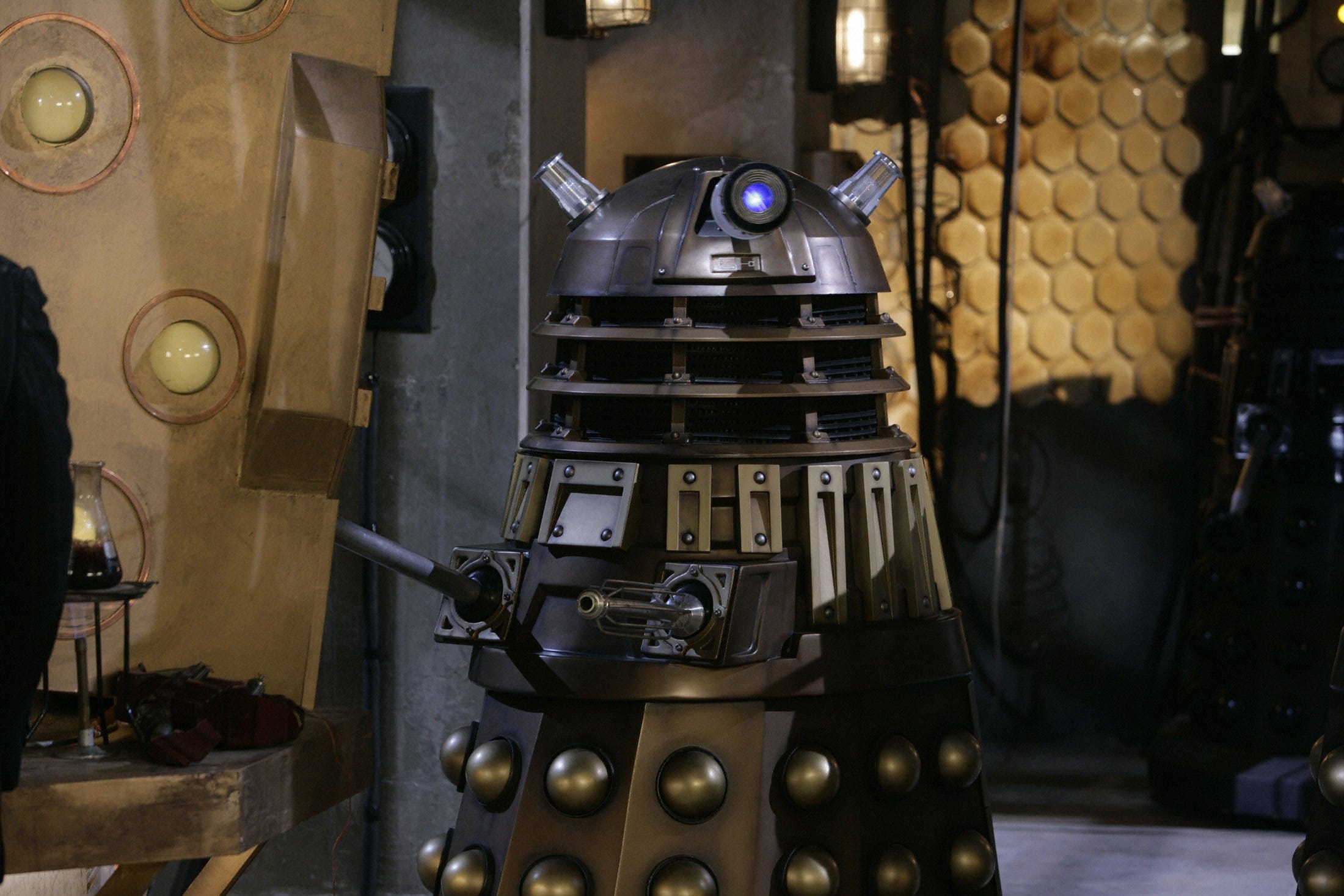
The last four Daleks in existence plan to merge their DNA with human beings to create a new master race in New York City, 1930.
Notable for:
Return of the Cult of Skaro.
Establishing shots of NYC (e.g. Liberty Island, the view from the Empire State Building) were actual footage shot by the crew, then spliced into footage shot in Cardiff.
A deleted scene explains why the Doctor is taking her on a third adventure even after he explicitly said he would take her on just one trip (which was extended to two—one in the past, “The Shakespeare Code,” and one in the future, “Gridlock”). This is a “detour” trip, the “scenic route” as the Doctor takes her home.
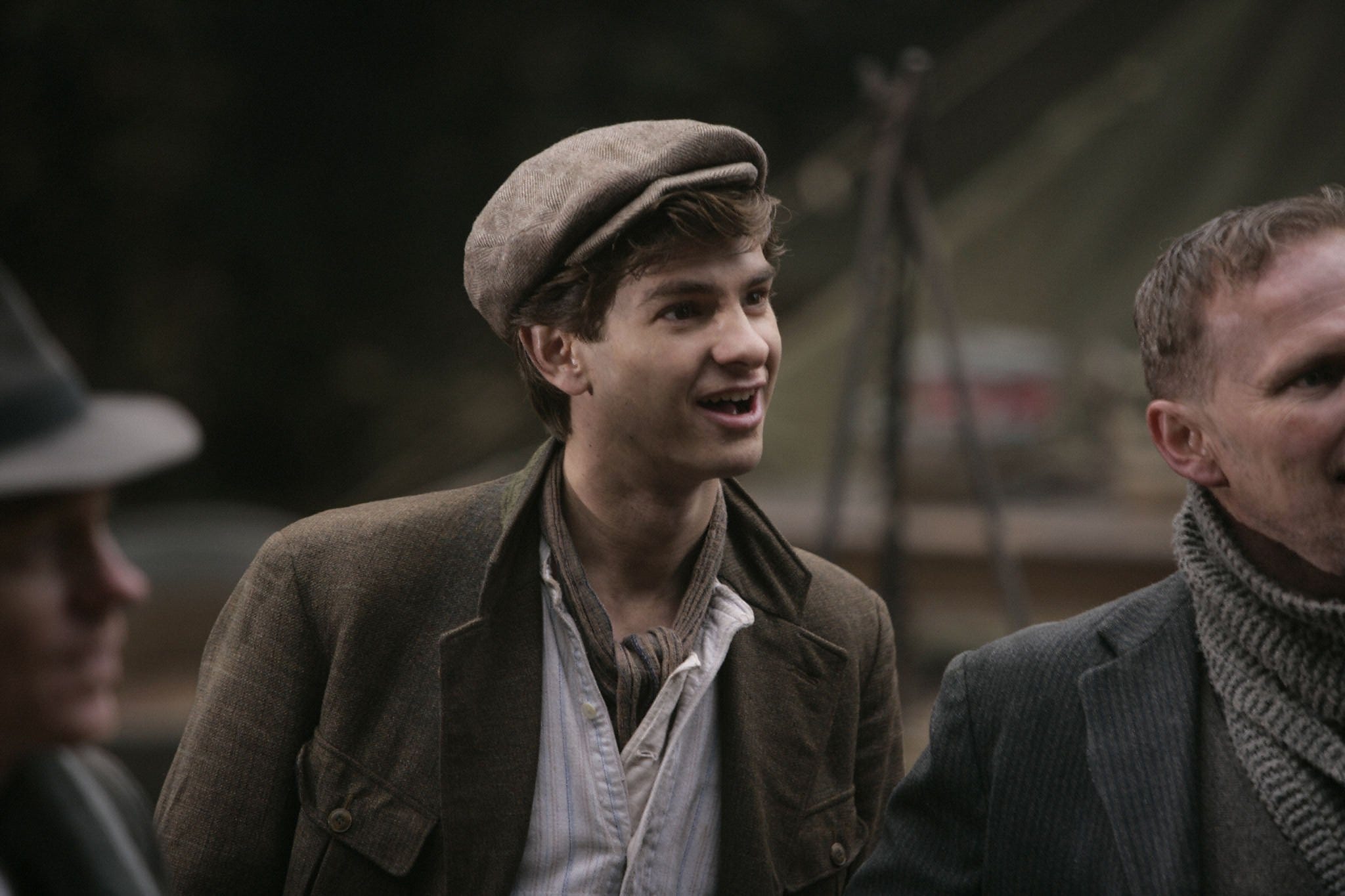
Andrew Garfield stars as Frank, and it’s clear the production team had no idea he’d become arguably the most famous person to ever come out of Doctor Who—the Doctor Who Confidential doesn’t mention him at all.
Pete commentary:
It’s always satisfying to see the Daleks interact with or threaten Earth. The show understood this immediately: after they proved to be a smash hit, the very next adventure was “The Dalek Invasion of Earth.” We saw them in the present in Doomsday, and in the far future in The Parting of the Ways, so this completes the trifecta of going to the past—but not too distant in the past.
This is an ambitious two-parter that makes the most out of its many resources: the Daleks, the larger guest cast, the New York setting. The setup is fantastic: lots of things happen in Part 1, and it ends on a truly eye-popping cliffhanger. Part 2, however, doesn’t let up on how far it wants to push the story, and it smashes into reality pretty quickly: the limited budget, the precious few minutes to wrap every character’s story in some kind of satisfying way, the impossibility of threading the needle of a story set in the past with world-changing consequences. It’s safe to say Part 2 doesn’t deliver on all the fun and coolness promised in Part 1. It doesn’t fall on its face, but it does limp over the finish line.
I can see why they tossed the deleted scene that establishes why Martha is continuing with Ten:
It’s not really necessary. Casual viewers don’t care, and fans will make up whatever in their heads.
The tone is all wrong. Ten is actually a bit cold and even slightly mean to her. It’s not a great way to start. MUCH better to open with them being happy and excited to be in New York City in 1930. Gets the audience on board right away, and we’re not thinking too hard about their relationship.
Technical detail: You could probably see the ESB from Liberty Island in 1930, but it would be a speck on the horizon, and not as large as Ten and Martha see it. That said, you can do a lot with perspectives and cropping (like when people are silhouetted against a gigantic full moon).
The Daleks’ entrance is handled really well. I often get annoyed at episodes like Day of the Daleks that treat the Daleks’ presence in the episode almost as a mystery, despite being mentioned in the title. That said, they’re marquee monsters—you still want them to make an entrance Here, they balance it perfectly. No mention of their actual name, but the setup from Diagoras is really nice, and the other guy plays his irritation well (“Oh, what is that supposed to mean” “Who are we working for?”). You almost expect it to be some kind of “syke!” mislead, with a guy or a pig (which we saw in the cold open) in the elevator. But no: This is a Dalek episode, the audience wants to see Daleks—here you go!
The scene a bit later—the conversation establishing scenes between Diagoras and Dalek Caan—is superb: gets across exactly what this guy’s relationship is with the Daleks, and why Sec ends up choosing him to merge with. It’s criminal that it was cut from U.S. broadcast on the Sci Fi channel at the time.
It also establishes Sec’s motivation: Dalek Caan’s observation that the Daleks have been obliterated but that humanity always survives is leading him somewhere but he can’t quite put it together. Sec, of course, does, which sets up his speech later about, “Why are we not victorious?”
Nice subtle touches on the cruel indifference of the Daleks: Their response to the labor shortage is, “We need more bodies.”
The scene right before the cliffhanger shows how well Helen Raynor understands the Daleks: they don’t respond to meekness. If you want them to respect you, you have to confidently demand it. Martha plays this extremely well, even going so far as to use their catchphrases against them (“Report!”). It makes total sense that they then use it as an opportunity to explain, boast, and gloat—something they always love to do. The only problem with it is that it makes no sense that Martha would know this. There should have at least been a quick line from the Doctor that pushes her into this: “Ask them what’s going on, but don’t waffle. They hate weakness.”
I cant say how much I love the “But you have… doubts?” scene between the two Daleks in the sewer. Each beat and camera shot is perfect. The Dalek looking behind it, then swinging its dome back toward the other to say, “Yes.” Love it!
The pig slaves are an interesting choice. As a plot device in a Dalek show, they’re very good: They emphasize both how desperate the Daleks are (there are only four of them, so they need foot soldiers) and their casual cruelty: mutilating people, with no way to reverse the process. However, it’s hard to get past how silly they look—it’s hard to take them seriously. Laszlo mentions how they’re “trained” to kill people in gruesome ways, but because it’s Doctor Who, we never see it.
Theater
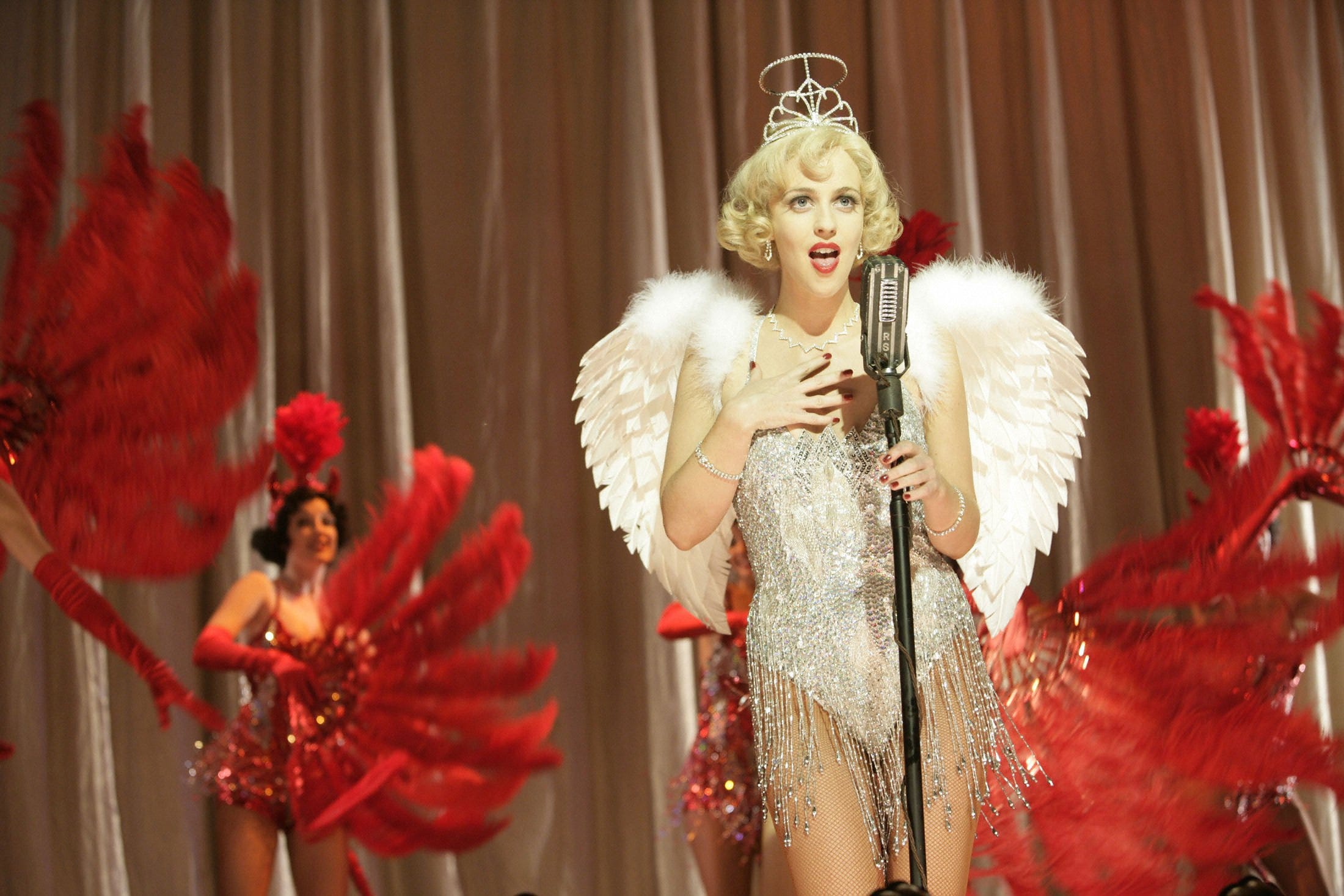
The story does an excellent job of depicting what at least feels like a realistic version theater life, especially in 1930s New York. Tallulah’s accent is delightful, and, though she’s very pretty and the lead of the show, she’s still clearly a struggling actress who’s only valuable as her next job.
All the backstage stuff feels very real, though the other girls and any other personnel besides Laszlo conveniently disappear when the script calls for it or don’t exist. No big, though—you buy it in the moment.
The Broadway number is nicely done. Your taste may vary, but it’s definitely in the spirit of big showstopping performances of yesteryear. It’s a bit ersatz in that it doesn’t feel like it’s part of a bigger musical or story, but that’s OK—it’s not like Murray Gold was going to write a whole musical for a Doctor Who one-off.
When Martha tells Tallulah that she had been on stage before for “Shakespeare,” Tallulah responds with “How dull is that?” Oh, honey, if only you knew.
Sec
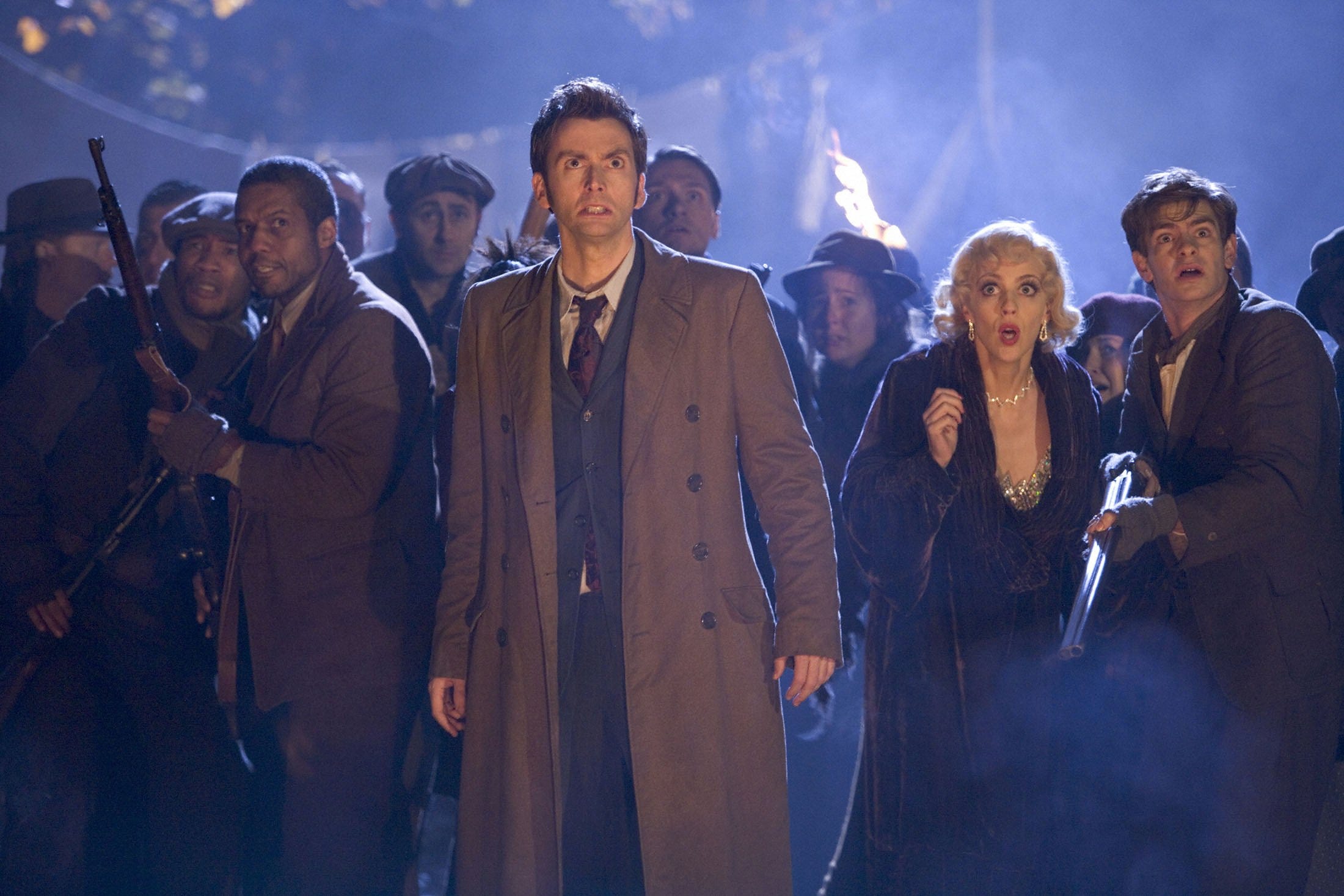
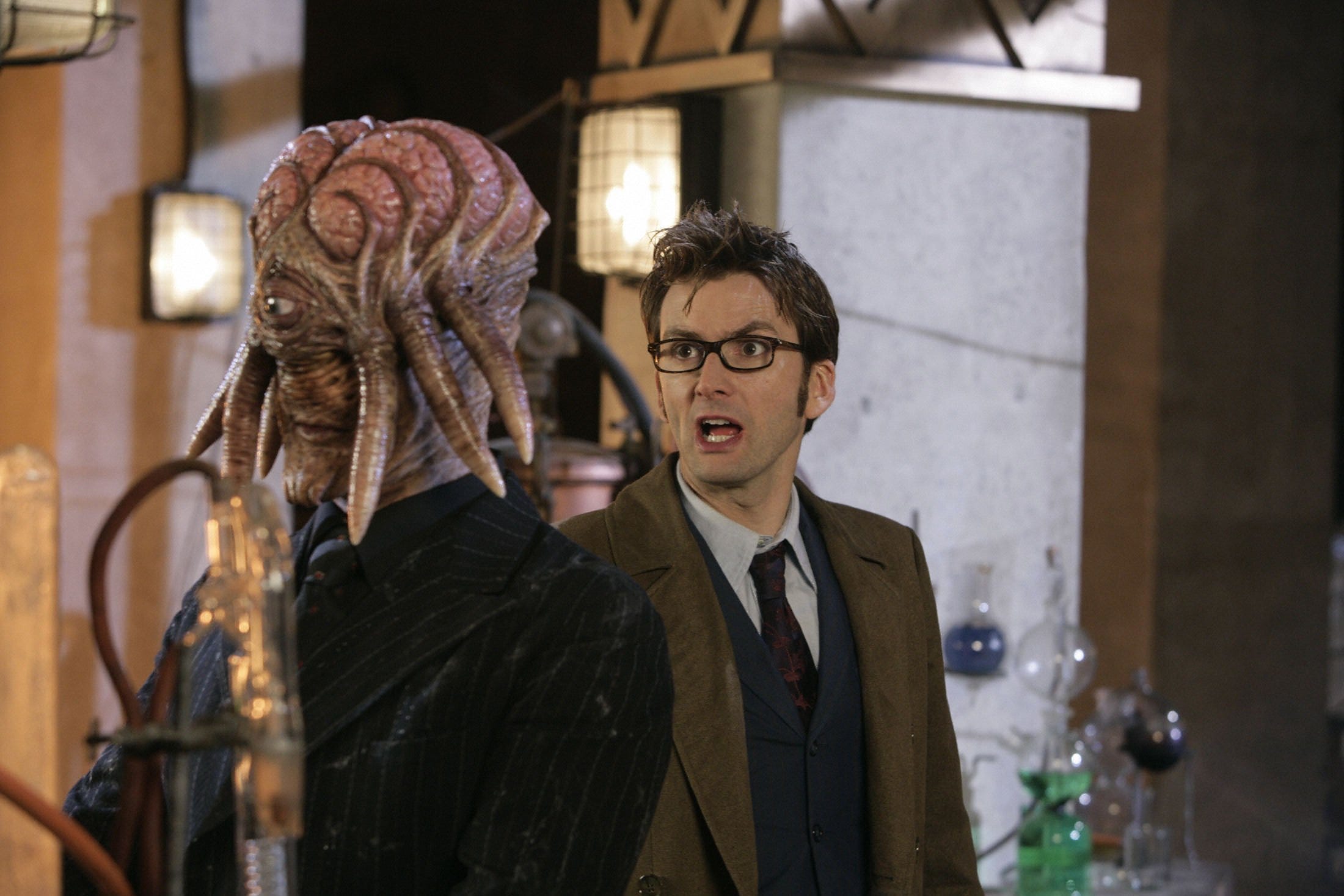
It’s a guy in a rubber mask! But what a mask—great little Dalek tentacles twitching on his cheeks. Here’s where I think casual viewers might have been weirded out, but Whovians have been handheld into this, and we buy it: it’s a good version of what you’d image a human+Dalek would look like.
Guest cast
Stealing virtually every scene he’s in is Hugh Quarshie as Solomon. His first scene certainly establishes who he is really well, and even if you might quarrel with the way he resolves the bread conflict, you can’t deny he’s the guy in charge and everyone respects him. He gets a clever line about the neighborhood getting classier by the day. His death is perfectly handled: It’s a Dalek story, so someone we like has to die, and his speech is so well-written—any reasonable human would listen—but of course the Daleks have not even an ounce of compassion.
Andrew Garfield makes Frank very memorable. We definitely feel it when he’s taken by the pig slaves, and are extremely relieved to see him OK. He has an excellent final scene with Laszlo, essentially vouching for him, and you hear the sympathy in his voice. You get the sense that Frank will eventually become the new Solomon.
Miranda Raison as Tallulah is an acquired taste, but she definitely goes for it. I really like Tallulah and think her accent is delightful. She’s always performing, even when they’re about to be killed by the slaves. Of course she’s the one to yell, “Dalekanium!” with Martha.
Eric Loren finds the humanity in Sec quickly, and he has a nice final line about death and destruction choosing the Daleks.
Ryan Carnes is perhaps less memorable as Laszlo, but his happy ending is a great contrast with the rest of the story, and strikes the right tone at the end. Would be too depressing otherwise—RTD’s instincts were very good here.
The Problems with Evolution
Like I said, Part 2 takes a tumble about halfway through, after the attack on Hooverville:
The script does a great job of papering over plot holes up until this point, but multiple explosions in Central Park would attract attention from the police and firefighters, even in 1930. Same with two flying Daleks leading the Doctor to the sewers. How could someone not notice that?
The final execution of the “human Dalek” plan has several problems:
Sec says they have eleven minutes until the solar flare from the START of the Doctor helping them. This is just a ridiculously short amount of time, and I have no idea why they didn’t say “37 minutes” or even “92 minutes.” Ultimately doesn’t matter, but it’s irritating.
How do the Doctor and Sec not notice what the other Daleks are doing? I get that there needs to be a moment when the Daleks do the double-cross, but it should after they do some crucial component of the plan, then the Daleks stop them and take some time to execute THEIR plan.
The big problem with the plan is that it reneges on the promise it made at the beginning of the episode: We see what a Human Dalek is—it’s Dalek Sec, a.k.a. Mr. Tentacle Face. Turning the human “shells” into human Daleks, but still having them look human, is betraying the promise. Clearly there wasn’t budget for this, but then don’t promise it, however indirectly.
The Doctor’s last-minute shift of the plan has good and bad parts:
I like that the Doctor must think on his feet, and the fact that his sonic doesn’t do so well against 1930s riveting might be a subtle point about the working class.
However, getting in the way of the lightning bolt, and that transferring his DNA into the process… well, we’re already stretching things on the “suspension of disbelief” spectrum. This is stretching Doctor Who science and plotting up to the breaking point.
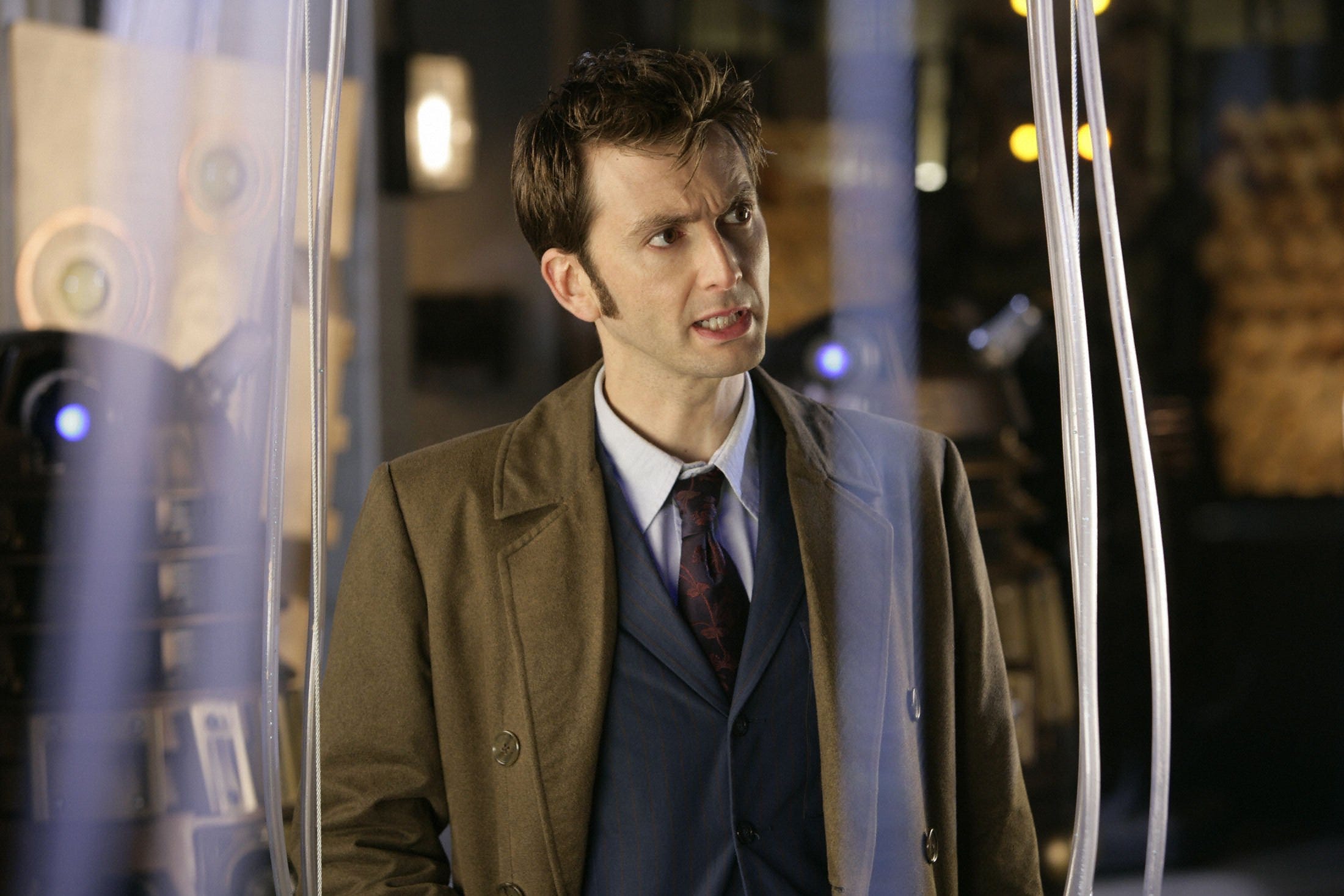
What pushes it OVER the breaking point is the climax. The Daleks have apparently succeeded in putting “100% Dalek” DNA into these humans. But of course the Doctor has now inserted Time Lord DNA into the picture, which screws it up. Fair enough, but are we really to believe the effect would be so large that NONE of the Human Daleks shoot the Doctor when ordered? Not one? They ALL suddenly have a moral problem with it? We don’t know the Time Lords to be a morally superior race, and even if you believe they are, seriously, not a single Human Dalek feels their Dalek “urge to kill?” I get the drama of it, but this was too much for me.
Ending is excellent: The establishing that Dalek Caan is the absolute last, no-takebacks Dalek in all of time and space gives dramatic clarity. Caan’s defiance of the Doctor, the Doctor’s surprising speech to him, and his “emergency temporal shift”—you’re on the edge of your seat. The last beat with him knowing that he’ll see Caan again (because he always does) is a nice promise, one that at least we know the show (and RTD) will eventually deliver on, even if they have no idea what form that will take at this point.
What did Pete’s family think?
Grace loved the vibe, especially. Broadway stuff and Tallulah. She enjoyed watching it again, but also understands that it’s not the best story. She thought Sec looked like one of the aliens from Calvin and Hobbes. She sympathized with the Daleks other than Sec—she said the plot wasn’t something the Daleks would ever do.
Four Questions to Doomsday - Pete
Why did the Randomizer take us here? To keep our singing streak going: both The Ice Warriors and The Space Pirates have sopranos creating some eerie transitions, and the Swampies are all about chanting “Kroll.” It’s all been leading to Tallulah’s big showstopper.
What if the evil plot had succeeded? It really should have. The Human Daleks kill the Doctor, then the others. However, pretty quickly they start to have problems, and they slowly break free of Dalek control (maybe they have a “you have doubts” moment in the sewers, just like their masters). They organize covertly, then plan to wrest control from the Daleks. They might even discovery the Daleks have some kind of execution fail-safe and seize control of it before they strike, setting off a new Time War on Earth: Daleks vs. Time Lord/Dalek hybrids.
Where’s the Clara splinter? She’s at the Empire State Building, pushing buttons on the elevators to make sure they’re always there for the Doctor and his friends, but that the Daleks and pig slaves keep needing to wait.
Dalek, Ogron, Professor Hayter, Viscount Banger, Fixed Point in Time, Lady Cassandra, or Zarbi? If I had to rate each episode, I’d give Manhattan a Dalek, and Evolution a Prof. Hayter, so this is a Dalek-Hayter hybrid for me.
Chris commentary:
Reach definitely exceeds grasp here. When Daleks come to Manhattan, you want it to be big and bold, epic, a billion billion Daleks … or certainly more than the classic series standard of 4, no? Well, unless …
the whole Sec/Cult of Skaro “aren’t they sad/sweet/scrappy” kind of thing could have done really well if it played out like a parody of the classic NY immigrant’s tale, just four Daleks trying to hit the big time with one big score on the Empire State, and one of them really wants to integrate with the locals. Plenty potential but …
this script also wanted to play it scary and like they’ve taken over the city unnoticed and can just casually fly into Central Park and … it just ain’t got the New York sense of scale, man. Especially not in the Prohibition era! How can you do NYC in 1930 without speakeasies and gangsters and jazz, RTD?
Even Moffat (arguably, we’ll get there) couldn’t make the scale of NYC work and he had the budget to include a CGI Lady Liberty.
Should Who just stay the hell outta New York, man? Discuss! (With Peter Purves atop the Empire State. Hot diggety!)
Even though there was a tiny bit of location shooting, it really doesn’t feel like it. The skyline scene, today, makes you wince. Setting it in Central Park makes a kind of sense; at least you can film park scenes in Cardiff. But those are definitely British park benches.
What was the point of Solomon if you burn the character in that phenomenally stupid way? He didn’t seem naive before. Are you playing it for laughs a la Mars Attacks?
Likewise, what’s the point of the pigmen? What was it about pigs that fascinated Daleks so much they wanted to hybridize them? Pigs are astonishingly wilful, intelligent creatures, how do they make for good slaves?
(And maybe, by the way, in an American context, in a story set just 65 years after the 13th Amendment, in the land of Jim Crow … just don’t use that word.)
And how did none of the pigmen at any point in the script ever say “thanks for saving my bacon, Doc?” (Because that’s about the level of dialogue we’re at here, when full-on cheesy would have been better.)
Hooverville History Corner: Yes, there actually was one in Central Park at this time, but it was a lot better attended to and administered.
Accurate that the Depression was called a Depression during the Hoover administration, but not accurate that the Empire State was built with disregard to workers (or that a dollar a day would have been considered “slave wages,” which isn’t even a thing)
Time to do a Dalek story ratings roundup, here near the halfway point?
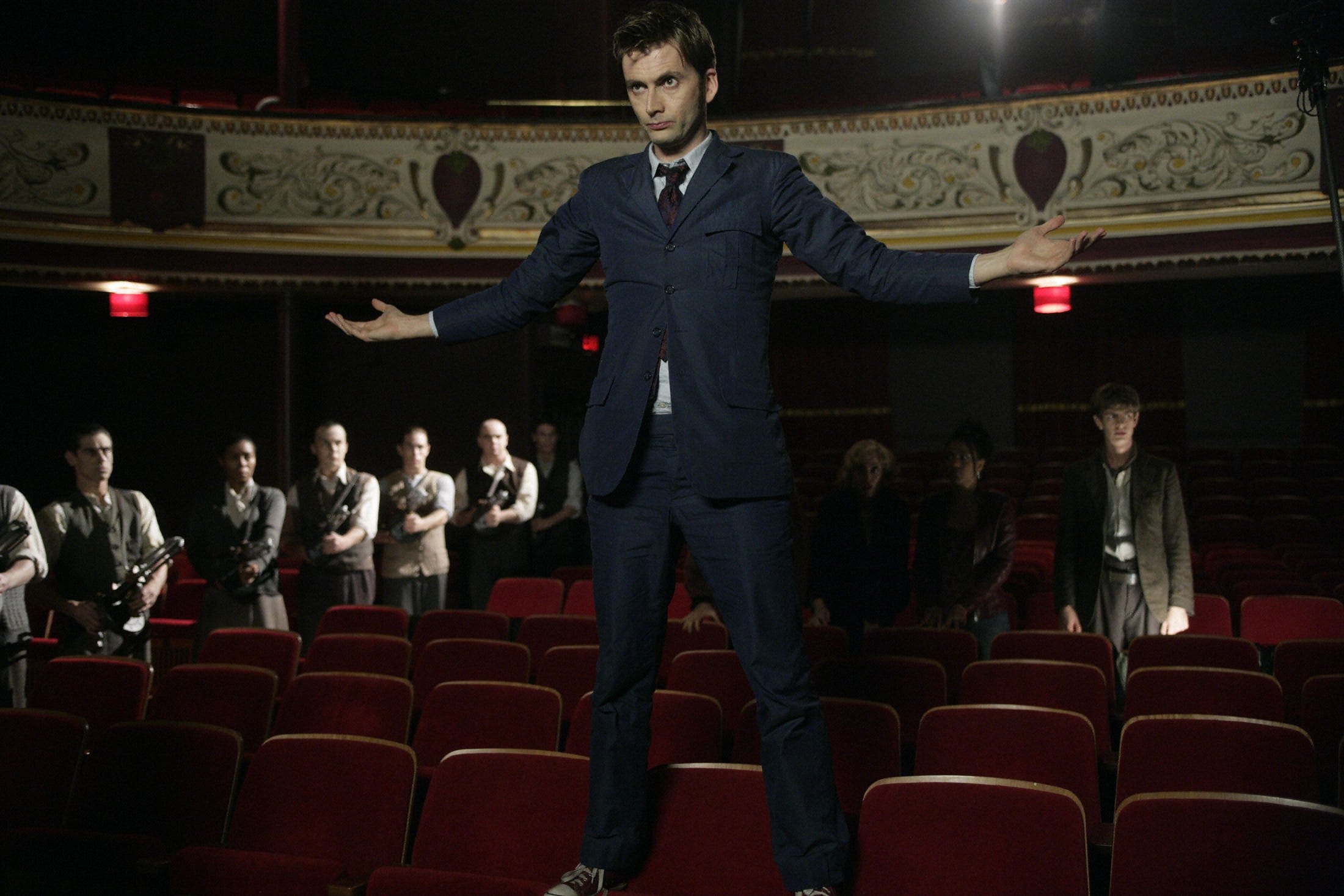
Well, the accents have gotten unintentionally funnier. But only Tallulah is really leaning in to the Bugsy Mallone of it all (which is surely where her name comes from). And her dance number may be the best thing in this.
Should Daleks in Manhattan have been a musical? The cast do sometimes seem like they’re about to burst into song, Dalek Sec could have killed with an “I want” song – he and the Cult could have argued back and forth about how cool / awful America is, like the Puerto Ricans in West Side Story, and … well, at least Brits have an easier time sounding like Americans when they sing.
Oh Doctor, surely you’d wonder if that glowing green ball looks like a Rutan? Did Fang Rock mean nothing to you?
The most unintentionally hilarious thing about the Daleks is … are they becoming nudists? One’s basically walking around in a surgical gown, naked at the back, and Sec seems to really relish letting it all hang out before his conversion …
when you think about it, Daleks have come to Manhattan and … stuck bits of their pants on the Empire State Building? Damn tourists!
There’s a point where the Daleks are accused of having no emotions, and … c’mon, man, that’s not the Daleks. Hate is plenty emotional!
Once I realized it was the Dalek version of “Friends,” my brain came up with a new version of the theme:
So no one told you life was gonna be this way (EXPLAIN! EXPLAIN!) / you’re in the Empire State with human DNA! / Seems like you’re always stuck in a travel machine / but when it hasn’t been your Day, your Death, your Power, or even your Eeeeeevil …. Caan’ll be there for you! (When the flare starts to fall) Caan’ll exterminate you! (cause we’ve been here before) Caan’ll run out on you! (cause he’s a time traveller too …)
Four Questions to Doomsday - Chris
Why did the Randomizer take us here? The Statue of Liberty, featured in our previous Whomoji. November, 95 years ago: seasonally appropriate programming! Or maybe …it’s referencing a certain president’s “Piggy” comment?
Where’s the Clara splinter? Behind Tallulah’s sudden radical shift in feelings towards her pigman lover?
Dalek, Ogron, Professor Hayter, Viscount Banger, Fixed Point in Time, Lady Cassandra, or Zarbi? It’s a Dalek … no, wait, what’s that coming out of its casing? What is this horrible hybrid? Well, thereby hangs a tale.
Y’see, Professor Hayter’s papa went to Columbia University in the 1920s, lost everything in the Wall Street crash, ended up in Hooverville, and he met this dame, see, and her name was Cassandra, and why mister, she was so thin you could almost see right through her …