

Plot Summary
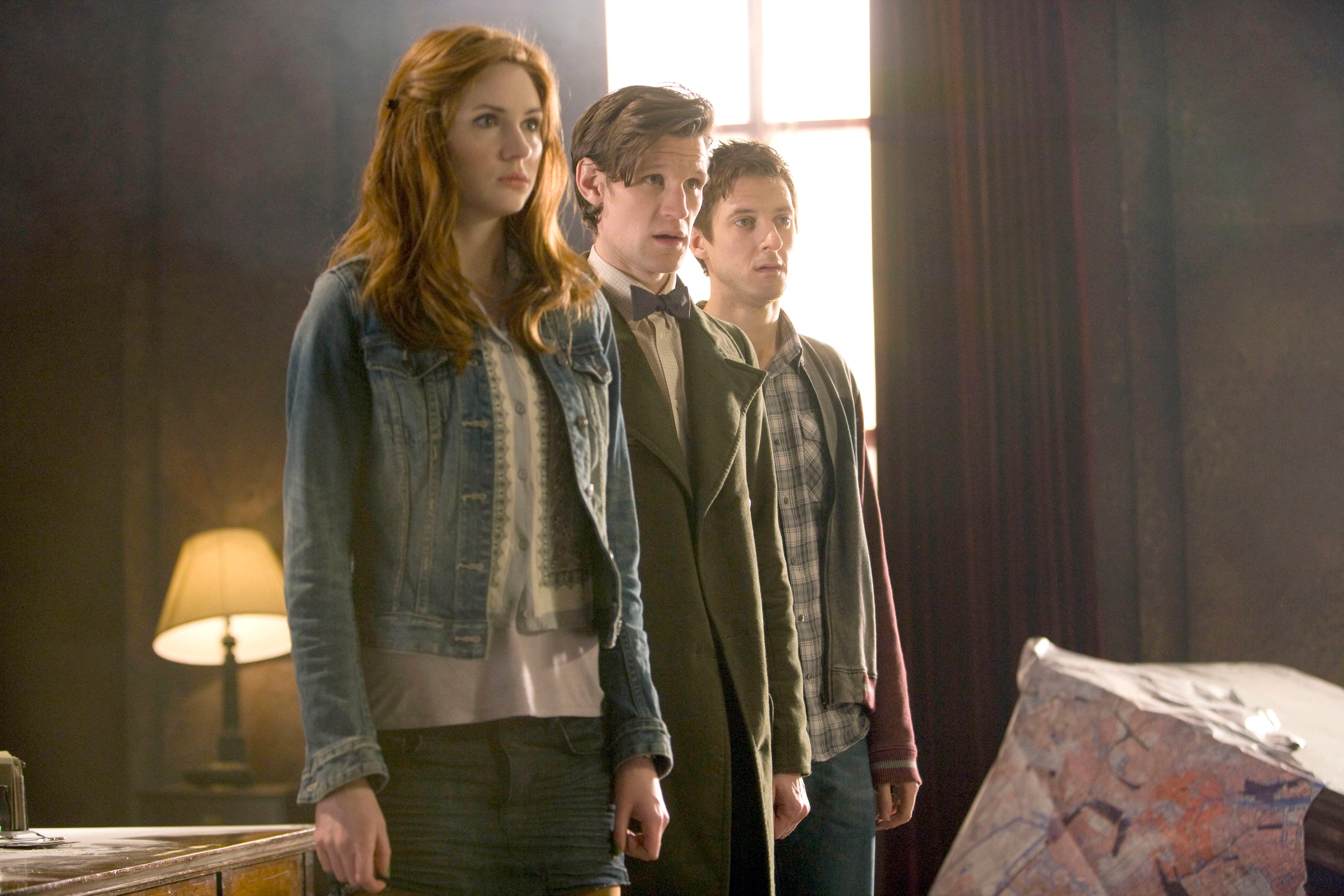
Amy and Rory’s best friend forces the Doctor at gunpoint to travel to Nazi Germany, 1938, landing them in the middle of a complicated assassination plot.
Notable for:
Serves as the mid-series premiere of Series 6, following the cliffhanger ending of A Good Man Goes to War.
Reveals that Mels (Melody Pond) is River Song, completing the arc begun in Series 5 of who River Song is and how she came to be.
Features the first full regeneration of a female character in televised Doctor Who, as Melody Pond regenerates into her adult form as River Song.
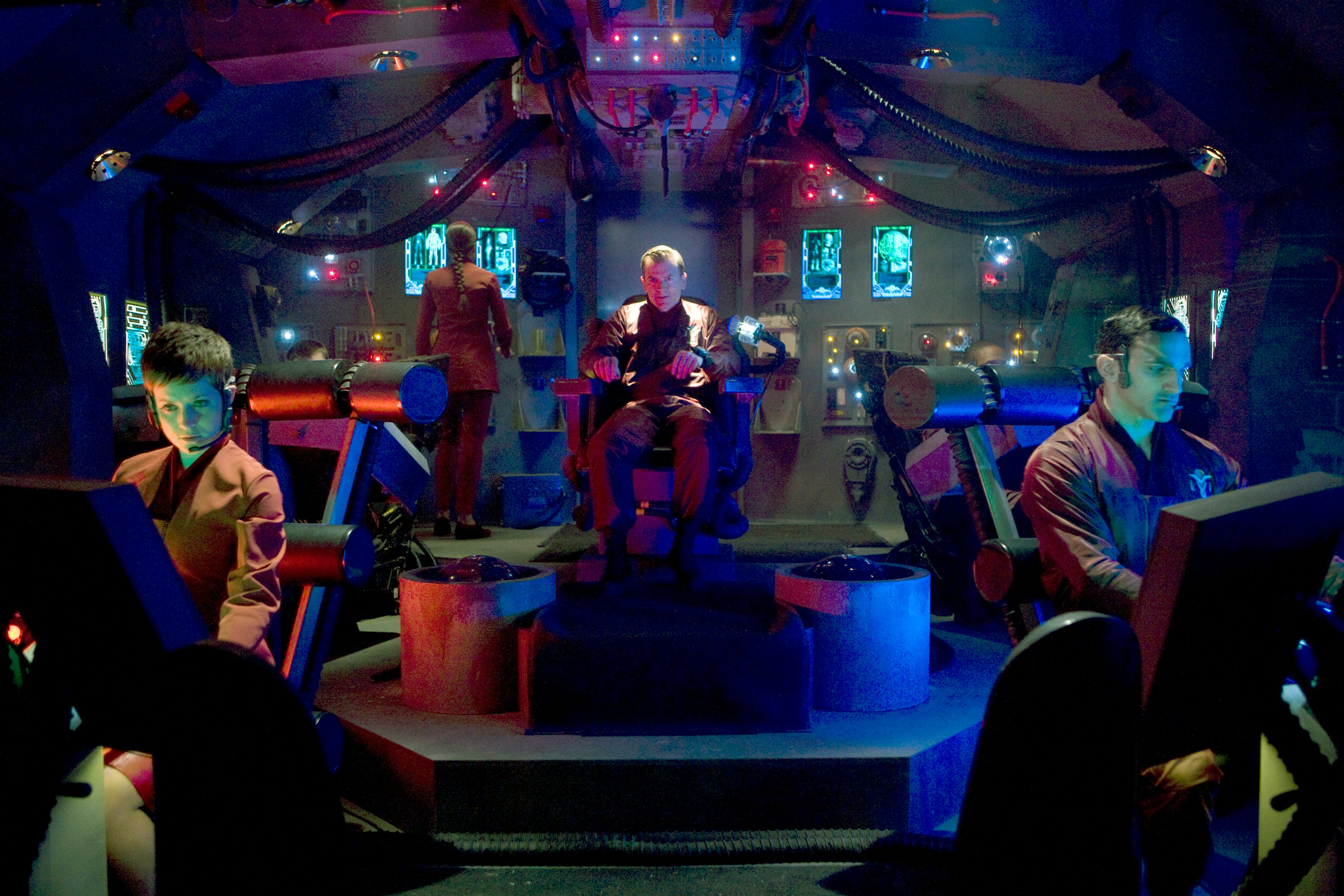
Introduces the Teselecta, a justice department time machine disguised as a human, crewed by miniaturised people.
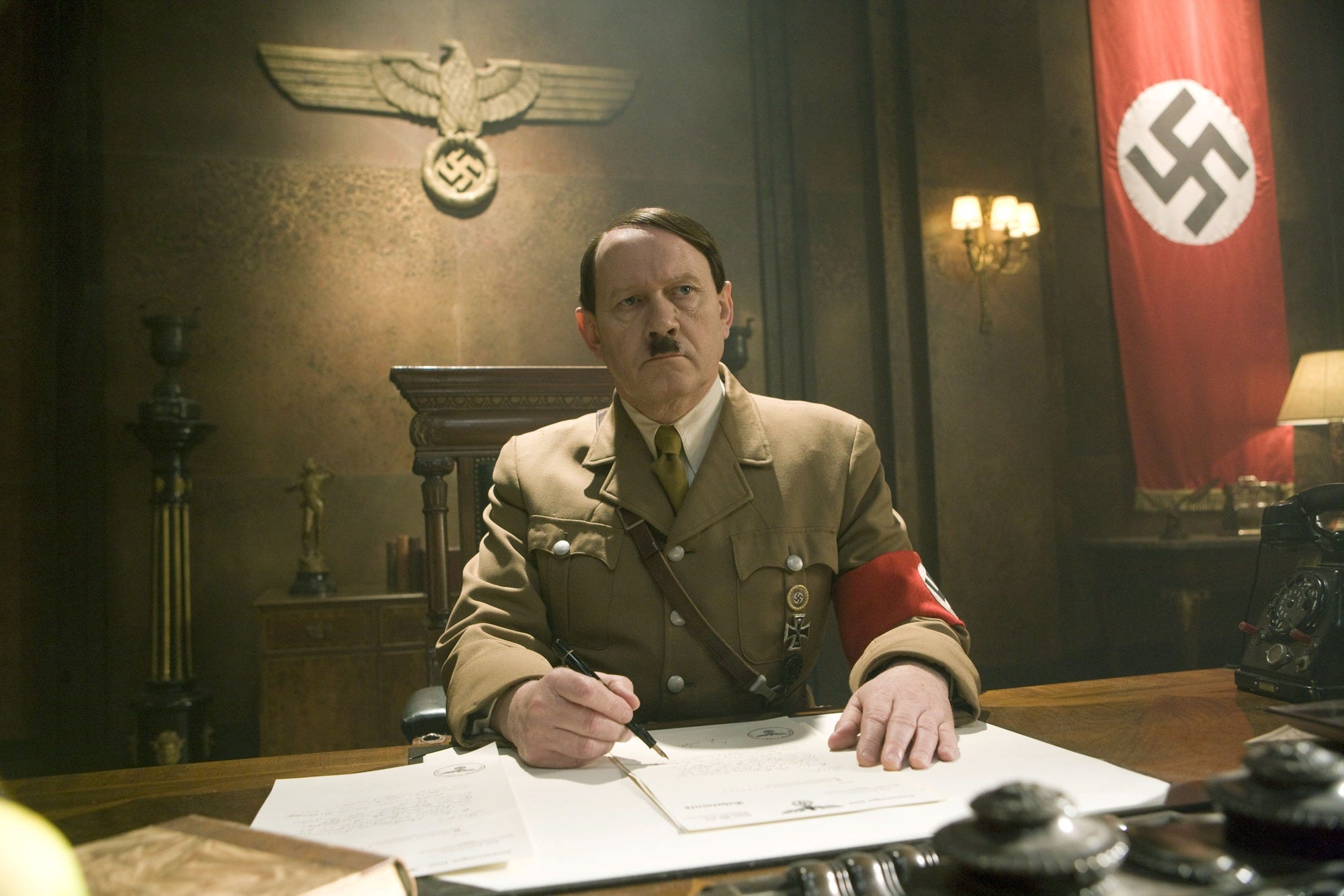
Adolf Hitler appears as a character but plays only a minor comedic role, spending most of the episode locked in a cupboard.
Jenna Coleman auditioned for Mels.
Establishes that the Silence is a religious order, not a species, whose goal is to prevent the Doctor from reaching Trenzalore.
The opening cornfield sequence was the last scene of Series 6 filmed, delayed to allow crops to reach the right height.
Guest star Davood Ghadami later became a regular cast member on EastEnders.
Prequel episode shows Amy calling the Doctor, and him not picking up.
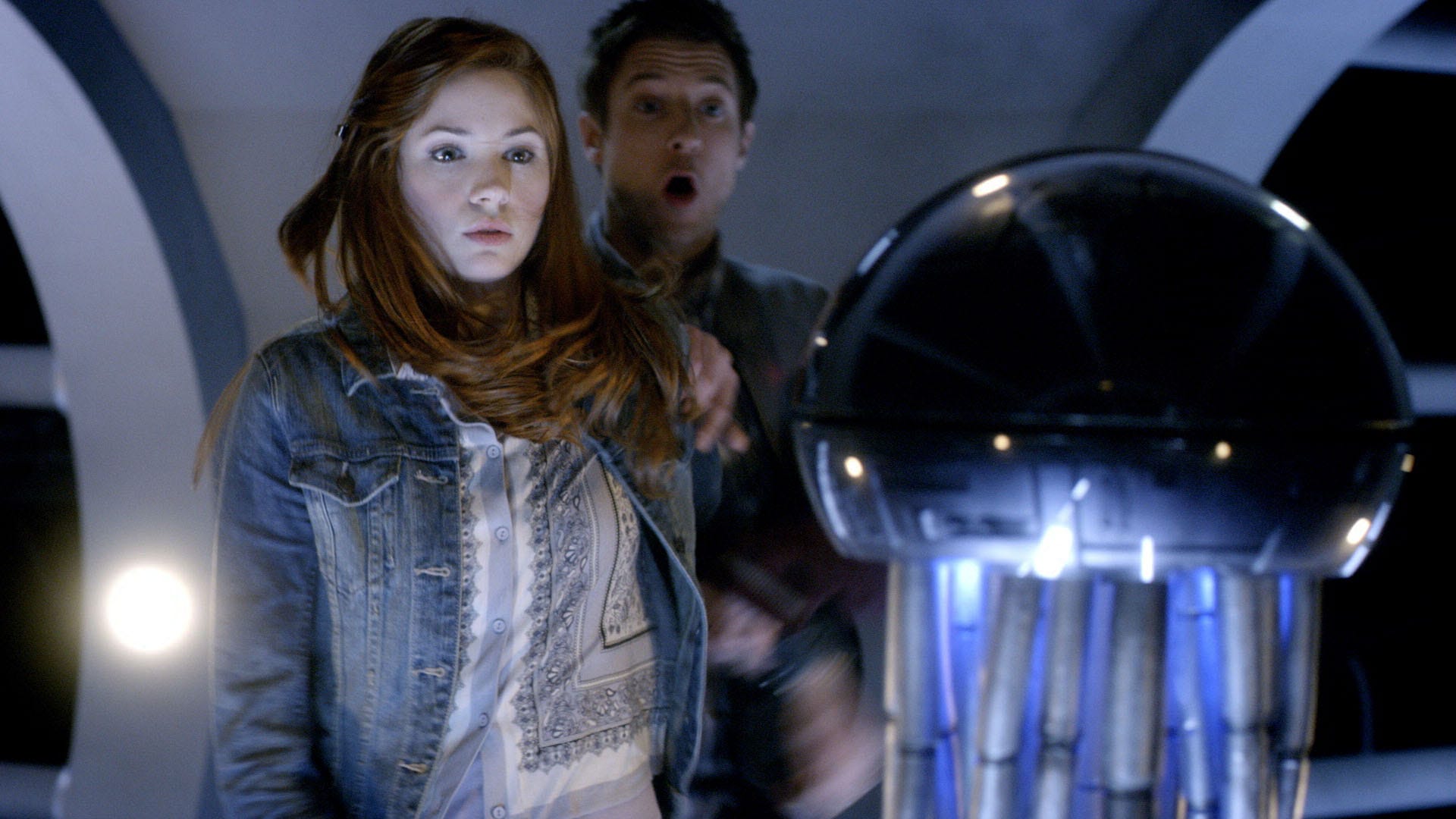
Pete commentary:
Let’s Kill Hitler is totally nuts, which arguably makes it good Doctor Who. It goes in unexpected directions, plays fast and loose with continuity, has a nice helping of fan service (the holograms of previous companions), touches on real history, and does wildly strange things with time travel. A lot to do in 45 minutes!
Right from the get-go, you can tell this is meant to be a madcap comedy, so anyone looking for a serious examination of the morality of going back in time to kill the human monsters of history will be disappointed.
That said, the Teslecta and the crew manning it do seem to be from an odd future where this issue has been adjudicated and a strange solution found—pluck evildoers out of history just before they’re recorded to die anyway. It’s a take, and if Doctor Who were more like Black Mirror, it might make a decent episode. Something for a Torchwood revival, maybe?
Mels, played by Nina Toussaint-White, is a hoot. I remember being irritated by her because she gets in the space of our favorite dynamic—the Doctor-Amy-Rory relationship—but she’s genuinely cool and funny. She doesn’t have much screen time, sadly, but it’s too bad they never went back in time to have an adventure with just her. It’d be hard to justify, given that the whole point of her is to kill the Doctor. But her brand of “cool wild card” is different from River’s—it’s more chaotic—and would be interesting to try for more than 15 minutes.
Question: Is it supposed to be obvious who Mels is to the audience? I remember putting together, “Oh, it’s River,” when she first arrives before the big reveal. Moffat is clever, but introducing a character who’s supposedly been in the background the whole time is a bit of a giveaway—almost to the point you start to suspect it WON’T be River because it’s too obvious.
The name thing, too—Mels-Melody—like, come on. At least the in-universe reason is believable: that Amy named her daughter after her daughter. Boy, Moffat loves his bootstrap paradoxes!
There are a bunch of memorable moments in this one, but my favorite is probably when the Doctor says, “Believe me, it was an accident” after realizing they’d just saved Hitler’s life.
Which brings up a bunch of uncomfortable questions about how everyone got here: They only realize they’re in the wrong time zone at the last minute. You’d think one of the first things they’d do when on a mission is confirm exactly when they are. Then of course there’s the insane coincidence that the TARDIS decided to arrive when the Teslecta happens to be doing its thing. You have to headcanon that one drew the other there, but why did the Doctor take Mels to where she wanted to go in the first place?
The anti-bodies are a really fun design, and their voices are scary. That said, what crew in their right mind would agree to work on a ship with killing machines all over the place in the hallways, and all it takes for them to vaporize you is to forget one software update on your Apple Watch?
They also take way too much time to kill Amy and Rory. Yes, obviously they can’t die, but it’s too long—stretches our suspension of disbelief too far.
The central part of the story: the emergence of River Song and her apparent redemption is something we want to root for. The elements are all there, and everybody shows up in terms of performances. My problem is that there isn’t really a great moment that shows just how good the Doctor is. Sure, he’s fighting for every last breath so he can save Amy and Rory, but that’s a bit too self-referential to count. Also, he just almost killed the entire crew of the Teslectra. You think about all the moments in the series that exemplify how good the Doctor is and why he’s “worth it,” and the events here aren’t even in the top 10.
There was an opportunity here to do that vis-a-vis the premise of the title: That the Doctor won’t murder anyone, not even Hitler, and not just because it would screw up the timeline, but because “do that, and you’re not the good guys anymore”—a cut line from the shooting script. That stance, however, would put the show (at least this script) firmly on one side of a very gray moral line. And it’s one the Doctor has arguably crossed before. Still, I think it would have been a stronger story if it did this, and intertwined it better than just making it a throwaway line.
On the other side of the coin, there isn’t quite enough time in the episode to show that River is, deep down, conflicted about what she’s doing—that she’s not just a “bespoke psychopath” who only cares about killing the Doctor. It would have been good to have a moment or two before the end that hints at this, even as Mels. Moffat is more concerned with set pieces and jokes, which are all great, but you do wish the run time were a little longer to make the story more complete.
It also feels like a wasted opportunity to have Hitler and the Nazis play a bigger role in the script. But once Hitler’s in the cupboard, the whole setting is basically reduced to window dressing. Even the dining room/restaurant, which is based on a real place (the Hotel Aldon), is there just to have an elegant hall for the final confrontation between the Doctor and River. They’re in there for so long—why don’t the Nazis ever knock on the door at least?
Still, high praise for the dialogue and set pieces. The cornfield bit is really fun, and the twist with the “line” through the word “Doctor” that turns out to be Mels is genius.
Are there that many Corvettes sold in the UK? According to Perplexity it’s “around 100 Corvettes per year.” That said, this is clearly a classic from some collector, since it’s a third-gen, which was discontinued in 1982, and Chevy never made a driver-on-the-right version.
Absolutely love the scene where the Doctor and River are outsmarting each other retroactively, culminating with River pulling out a banana. Alex Kingston has marvelous chemistry with Matt Smith, and when they’re face to face and she kisses him gently, it’s a brilliant moment.
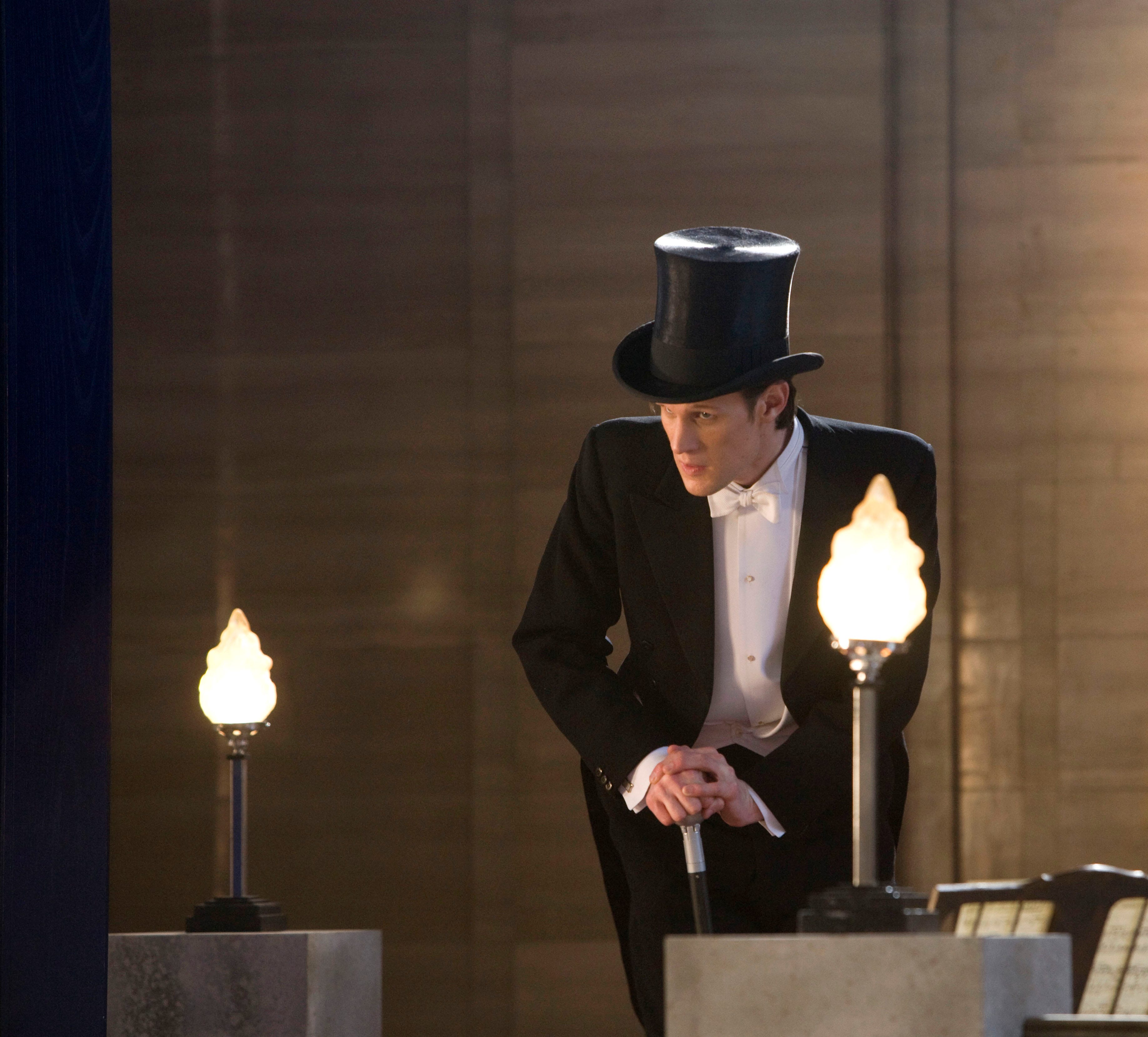
Smith’s entrance in top hat and tails mirrors the end of The Big Bang. It’s a great look for him, and he keeps it classy even when he’s on the ground. The Master isn’t the only one who always dresses for the occasion.
OK, time for a whole section of FAN CRITICISM…
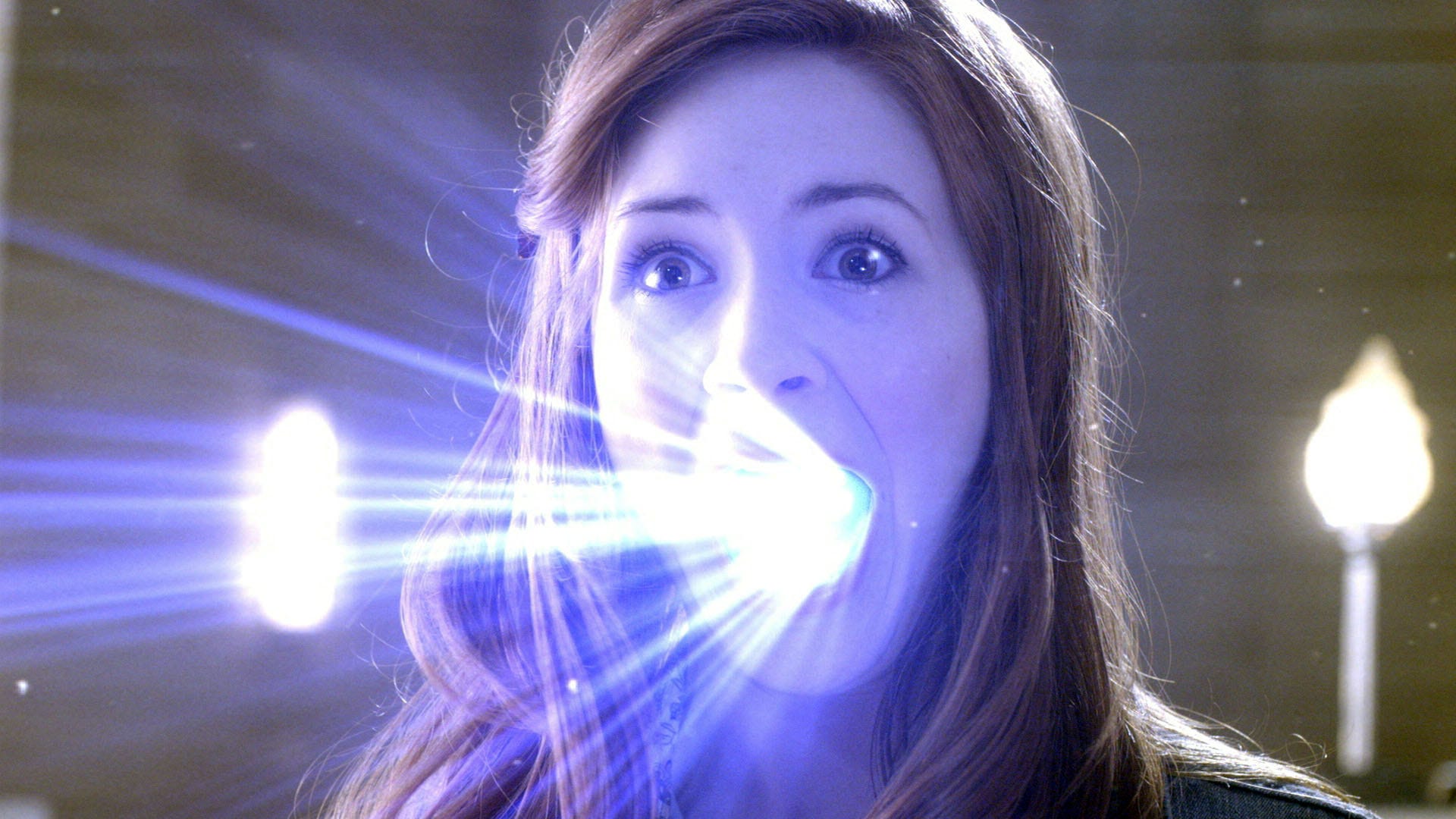
This episode does more to mess with the whole idea of regeneration than any other. It takes what seemed like slight expansions of the idea from the RTD era and turns the concept into basically magic:
For starters (and this isn’t exclusive to this episode), River is the daughter of two humans, but imbued with Time Lord-like abilities, including regeneration, because she was conceived in the TARDIS. That is a massive stretch to begin with, but it makes even less sense after the Timeless Child storyline, which reveals regeneration is not native to Time Lord society. Sure, you can argue it’s the proximity to the Doctor that gave River her abilities, but you need to contort an already stretched premise even further. This is more criticism of Moffat than Chibnall, but the result is a mess either way.
River being immune to bullets: This pushes the “regrown hand” concept from The Christmas Invasion—that being in the first few hours after a regeneration means you have salamander-like regrowth ability—to a ludicrous extreme. It also arguably contradicts the very storyline that’s the centerpiece of this season: The Doctor (seemingly) dies permanently at Lake Silencio because he’s shot mid-regeneration. I guess you can argue that River isn’t technically “mid” regeneration, but the fact that she isn’t even hurt by the bullets is mental. Where do the bullets even go?
Then she can use the regeneration energy offensively: She can basically turn it into a weapon. Again, the rules here are just made up—if she can do this, why not do it to the Doctor? I guess the bullets trigger it somehow? But she’s also seen invoking the energy deliberately at the end, so…. Moffat amps this up to 100 in The Time of the Doctor.
Then of course she uses the “lay on hands” technique to heal the Doctor. This takes the Tenth Doctor’s moment from Rise of the Cybermen and turns it into essentially a healing spell a Time Lord can invoke at any time (he does so in The Witch’s Familiar and is arguably the same process invoked in The Reality War). It definitely brings up the question why the Doctor hasn’t used it to heal the innocent people killed around him more. Even if he has to regenerate every time, isn’t he that good?
In short, Moffat has done more to damage the whole idea of regeneration than any other writer or showrunner—maybe even more than Chibnall.
Moving on to the whole idea of the Doctor regenerating: According to Moffat himself, the Eleventh Doctor is the last incarnation in his regeneration cycle, including the War Doctor and the meta-crisis Doctor. The Doctor should be aware of this, but this was obviously written before Moffat had written the War Doctor, so now we have to retcon what “regeneration disabled” really means.
Judging by this script alone, it seems clear that the “disabled” bit is about the poison. However, the voice interface could be simply stating that the Doctor’s regeneration cycle is expired.
The way to reconcile this—and, to some extent, why the Doctor behaves for most of his run thinking he has at least one regeneration left, I think we have to think of this as the moment where the Doctor realizes he his out of regenerations. That perhaps he didn’t know the meta-crisis Doctor actually used up one of them.
Ultimately this is Moffat’s fault for planning his whole run from the start!
At least Moffat gets things exactly right when he dismisses temporal grace as “a clever lie.” As it should be. (Otherwise, we never get any action with stakes in the TARDIS ever.)
What did Pete’s family think?
Grace loves Matt Smith and liked seeing this again. She didn’t remember anything about the previous episodes, though, so A Good Man Goes to War was spoiled for her by the recap.
Four Questions to Doomsday - Pete
Why did the Randomizer take us here? Ticking off the bootstrap paradoxes one by one. Almost all of them are in Moffat’s era. Did he fall in love with Bill and Ted’s Excellent Adventure when he was a kid? (Honestly wouldn’t blame him.)
What if the evil plot had succeeded? River kills the Doctor, and isn’t persuaded to stay behind to find out how good he is, perhaps because the Doctor doesn’t change into his black-tie outfit. Madame Kovarian wins, and Amy and Rory are stranded in 1938 Germany. Gotta dress for the occasion!
Where’s the Clara splinter? She works in the armory at the barracks nearby. She’s loaded blanks into all those rifles, so River was never actually shot.
Dalek, Ogron, Professor Hayter, Viscount Banger, Fixed Point in Time, Lady Cassandra, or Zarbi? Dalek for the performances and set pieces alone. This team—Smith, Gillan, Darvill, and Kingston—is so good, I’d watch them working at a fast-food restaurant. Hate what this episode does to regeneration energy, but it definitely has big regeneration energy. Fun times. Emperor Dalek
Chris commentary:
In 2012 Moffat confirmed that the Tesalecta was based on the Numbskulls in the Beano
Let’s Kill Hitler has balls, which Hitler didn’t. (DWM made this joke)
Hitler (and killing / reviving Hitler) was having a moment. Inglorious Basterds was 2009. Downfall parodies started in 2005 and hit a high in 2011. DWM featured 6 of them. The Hitler Parody Wiki began in 2010. Look Who’s Back published in Germany in 2012, movie in 2015.
The PTO Hitler-story Corner!
Let’s talk about when in 1938 this could be.
I was a bit miffed about Hitler in the cupboard in 2011. 15 years later I see it as Moffat challenging himself and succeeding – if Hitler’s in the cupboard, you have to turn everything else that’s happening in the story up to 11 just to distract. He does and it works.
Besides, the Rory punch and “shut up” and the Doctor’s “the British are coming” are satisfying enough
Amazing how Melody/River doesn’t need more therapy. First she regenerates when her MUM shoots her, then she regenerates when HITLER shoots her and HER MUM WATCHES.
“I am not Amelia Pond, I am a voice interface.” Is the TARDIS fitted with vintage Siri?
It is a bit weird both times the Teselecta gets the “end of life” part wrong … wouldn’t they be better at that?
Four Questions to Doomsday - Chris
Why did the Randomizer take us here? This and Kinda – two examples of batshit crazy stories of ultimate evil with a batshit crazy power mad ranting character. If only the Doctor had thought of stuffing Hindle in a cupboard …
What if the evil plot had succeeded? The Tesalecta’s? Mel’s? Hitler’s?
Where’s the Clara splinter? She’s a time agent who’s discovered that Hitler actually had the Mara inside him – and would have won WWII if it stayed there. So she’s waiting for Hitler to be shoved in the closet so she can surround him with mirrors and get the giant snake out.
Dalek, Ogron, Professor Hayter, Viscount Banger, Fixed Point in Time, Lady Cassandra, or Zarbi? Großherzog Banger!