

Plot summary
The Doctor, River, and Amy discover an artifact buried under Stonehenge that appears destined to destroy the universe—and save it.
Notable for:
The Series 5 finale; the Eleventh Doctor’s first season-ending two-parter, written by Steven Moffat
Return of River Song, last seen in the angels two-parter
The first BBC Wales Doctor Who series finale with significant principal photography outside Wales, filmed partly at the real Stonehenge; Rory Williams returns as an Auton duplicate
The Pandorica Alliance unites nearly every major Doctor Who villain in a single episode, including Daleks, Cybermen, Sontarans, Silurians, Zygons, Judoon, and Autons
Features the return of Rory Williams, who had been erased from existence, as an Auton duplicate of a Roman soldier
First appearance of Dorium Maldovar (Simon Fisher-Becker), who would return in Series 6
This is also the first episode to officially “reset” the contemporary chronology, explicitly setting the adventures in the year they were broadcast. Previously, everything in contemporary Earth is technically 1 year in the future after Aliens of London.
Pete commentary:
This is it—the big wrap-up to Steven Moffat’s first season as showrunner, and he’s in top form. Not only has he constructed a Rube Goldberg machine of plot threads, his trademark rapid-fire dialogue is at 11, and he subverts all our expectations with Part 2 going in a completely different direction than Part 1. And it all 100% works.
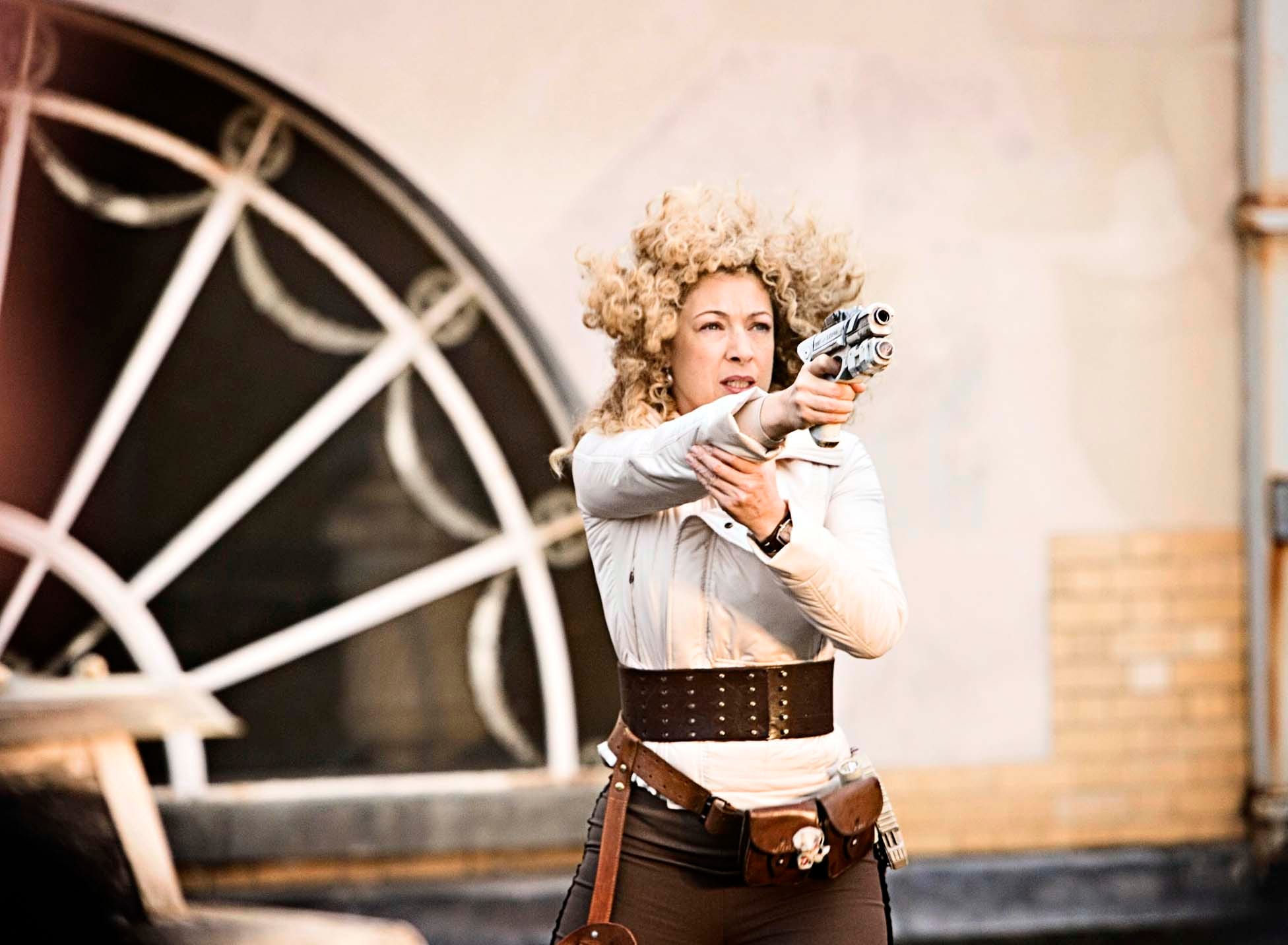
That this is supposed to be an epic finale is clear from the get-go with all the returning guest stars: Vincent, Churchill and Bracewell, the Queen from the space whale, and of course, River.
Ultimately this is Steven Moffat’s vision of the show coming fully into view: Doctor Who as a fairy tale. Doctor Who has always made up its own science and papered over it with technobabble, but the idea that simply remembering something would bring it back from oblivion or nonexistence… well, that’s the stuff of fables.
That doesn’t make it bad. The only way it works is if the audience wants it to work, and that depends on two things:
The script earning the outcome. There needs to be a struggle that makes some kind of sense, with the main characters making decisions that matter: the Doctor seeding his memory in Amy’s mind, Rory choosing to spend 2,000 years protecting Amy, River taking out the Dalek
The cast selling it. And do they ever. It’s wonderful to revisit this cast: Young, energetic, giving the material everything they’ve got. You can tell they’re really enjoying themselves, and the energy is contagious. By the end, we’re willing to believe the fairy tale.
As time would go on, Moffat would sometimes rely more on his cast than his plotting (e.g. The Power of Three). But he could still construct great plots when he wanted to (e.g. World Enough and Time/The Doctor Falls).
You also get one of Matt Smith’s trademark “yelling at spaceships” speeches, but there’s no doubt this one is the most epic. That may be because it was repeated at Doctor Who at the Proms, which then made it onto a soundtrack.
And IF you’re a killjoy who just rolls their eyes that the Doctor could just talk his way out of an alien army threatening to kill him and his companions, you get your druthers, too: It’s all revealed to be an act, with all the alien races conspiring to get the Doctor to enter the Pandorica.
That said, you do get a new thing to complain about: The monster alliance. It’s clearly an excuse to both re-use costumes and give a big dose of fan service. It makes zero sense in-universe—of all the races present, only the Daleks and to some extent the Sontarans have been shown to utilize time travel, so how could the others be there? You can argue that the Daleks basically shared the technology, but… why? What do you need the Silurians and Sycorax and Weevils for? Yes, fans love seeing monsters return, but not when it’s this gratuitous. You have to think Moffat simply misunderstand fan service on a fundamental level considering what he did with/to the Daleks in Asylum and Magician/Witch.
Also, surely someone else was thinking, “Why don’t they just kill the Doctor instead of imprisoning him?”
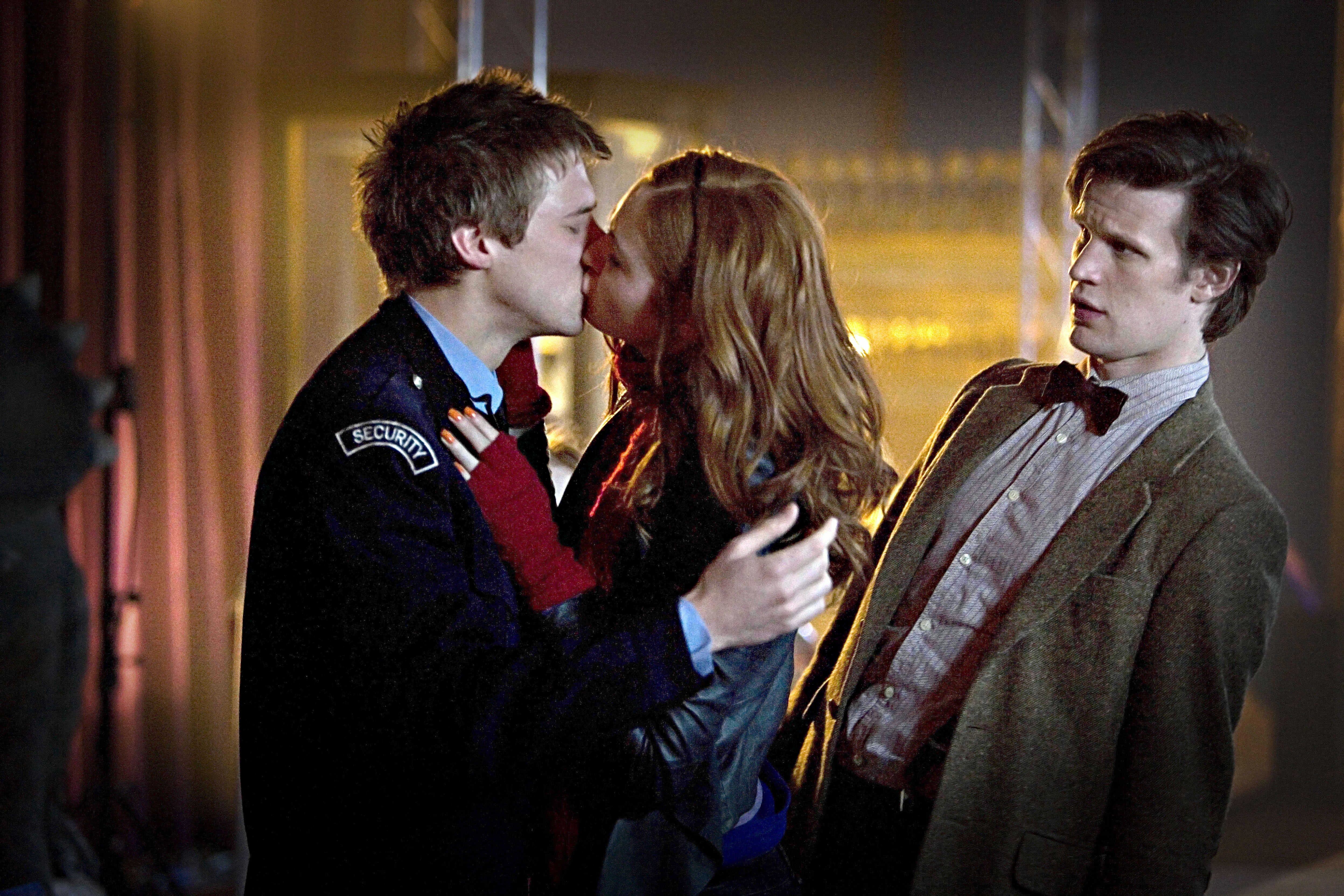
That said, the twist that the Romans are Autons is pretty great. Again, it’s a nice surprise, makes our heroes even more the underdogs, and provides the means for Rory to actually survive for 2,000 years. Again, Moffat getting tons of mileage out of his plotting.
Luckily the alliance is dispatched as quickly as it’s assembled. It is brilliant of Moffat to do an OTT monster-filled ending to just junk it immediately and do something else entirely in the second part. It still doesn’t make any sense, but I have to hand it to him for effectively using it as a mislead.
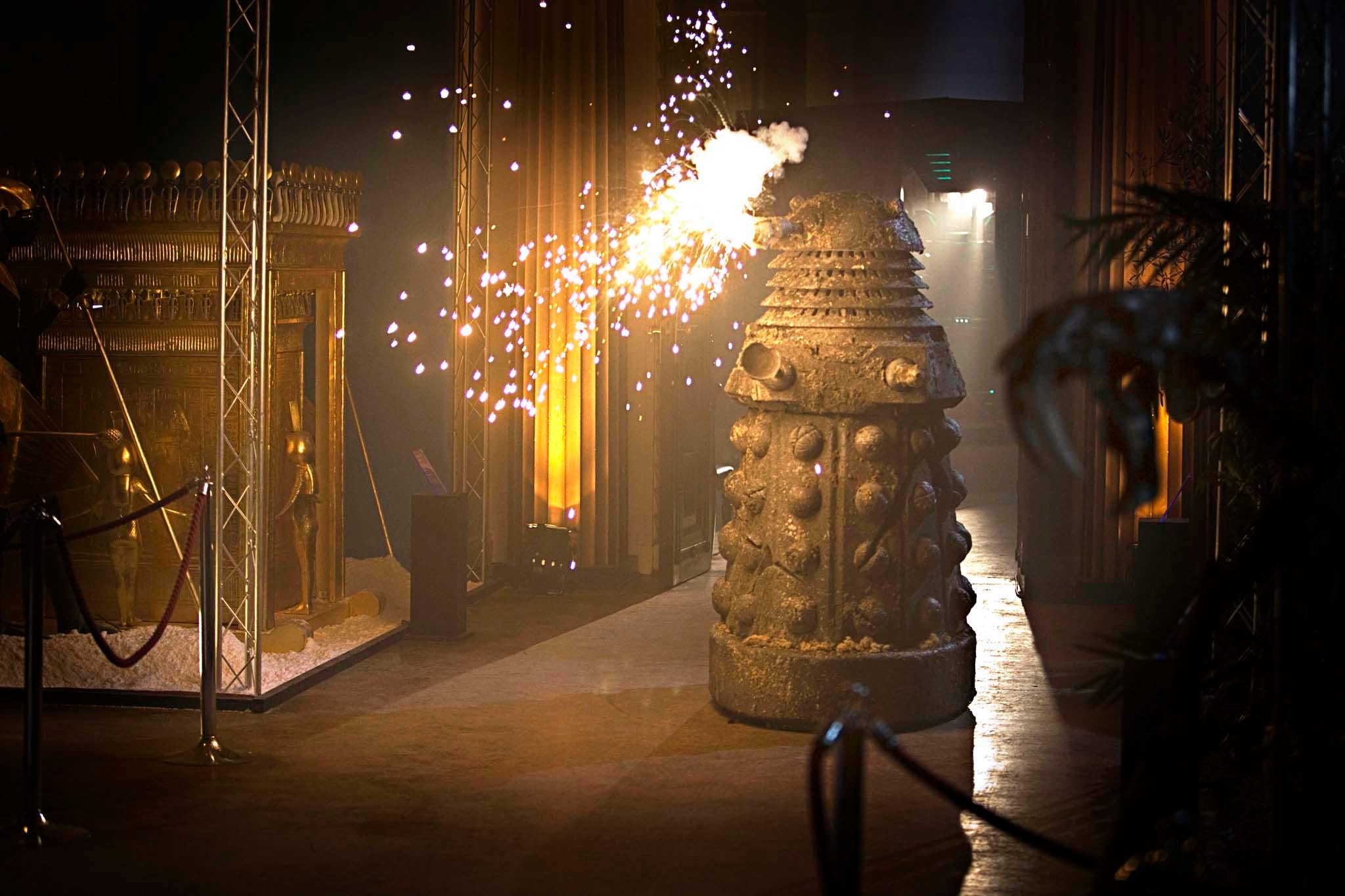
And you still get a teeny bit of that fan service in part 2 with the semi-resurrected Dalek. And, in a fan’s mind, it does make sense that the Daleks would be the only ones to partially survive the Pandorica since they’re time-travelers.
The fez bit is truly, epically hilarious. And the, “I can buy a fez,” line gets even more mileage out of the joke. Chibnall went even further with it in Kerblam!
Kinda nuts that the Doctor et al. have time to set up tripod lights all over Stonehenge but no one spots the Cyber head that’s lying out in the open.
The whole thing is remarkably well paced. The scene where Amy asks the Doctor about the ring perfectly slows things down and even dangles the arc plot in front of the audience, with the Doctor confessing that he didn’t just invite Amy to travel with him on a whim. Superb delivery by Smith on the line, “Does it ever bother you, Amy, that your life doesn’t make any sense?”
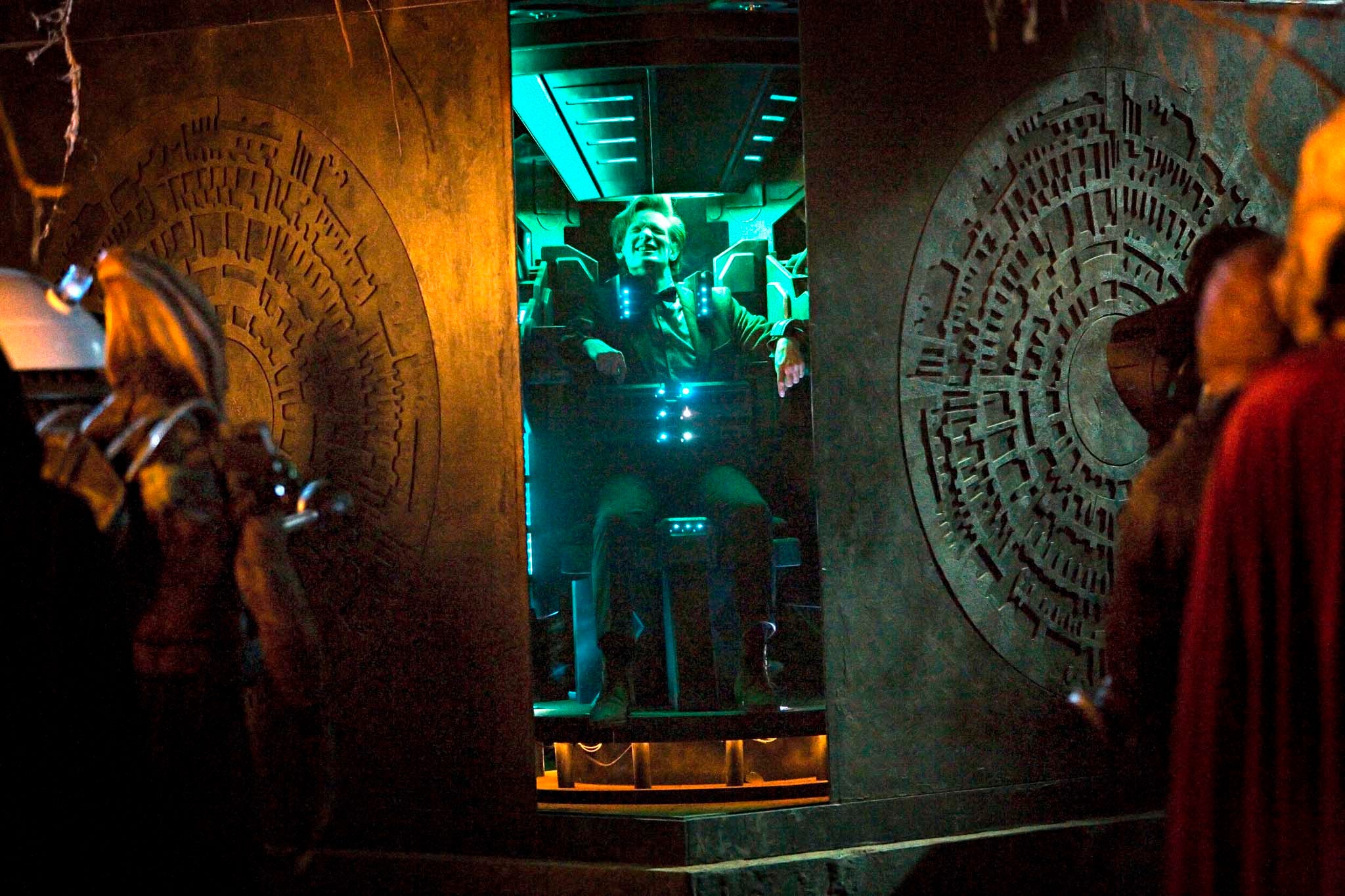
“Roronicus” lol
Love the reference to “star cults” at the beginning of The Big Bang. There’s something really genius about showing you what looks like “the world” and then pulling the rug out from under you with a this-can’t-be-real reveal.
Gotta love young Amy, but she’s all plot device, not a real character. Convenient that Amy’s aunt doesn’t insist that the museum staff tear the place apart to find her (that poor woman!). Also pretty convenient that little Amy disappears right when it might be a problem to look after her since the Dalek is attacking.
The Doctor’s use of the vortex manipulator is reminiscent of Bill and Ted. Speaking of, the casualness of it is a little nuts. Funny, but nuts.
The “...something borrowed, something blue” moment really does bring everything home, and it works on all kinds of emotional and character levels, even if the “remembering” stuff is nonsense. Karen Gillan really sells it, somehow pulls of making the simple recitation of the idiom dramatic. And it’s capped with Smith in full black tie, with a top hat and tails. He’s still the Doctor, always one step ahead.
Hold on, Amy demands that the Doctor kiss her?!! I forgot about that. Moffat was really into this love triangle for some reason. And poor Rory: waits 2,000 years for Amy and then gets more or less cucked at his own wedding when the Doctor shows up. “Mr. Pond,” indeed.
Nice foreshadowing (more of a promise from Moffat) where the Doctor says there are still plot threads to follow up on: Why did the TARDIS explode in the first place, and what does “Silence will fall” mean? I will say, I don’t know why everyone assumes “silence” means something other than an absence of noise, which is what you’d expect when the universe is destroyed, no?
“Orient Express in space.” Well then.
What did Pete’s family think?
Grace really enjoyed the episodes, though she noted there were things she didn’t understand since they were part of the larger arc.
Four Questions to Doomsday - Pete
Why did the Randomizer take us here? To get us as far away, tonally and thematically, as it could from the JNT era, which our last 3 stories were a part of. The Leisure Hive indeed was a statement about many things, but among them a push into harder sci-fi. The Pandorica Opens/The Big Bang is the opposite: a push away from serious sci-fi and into “Doctor Who as a fairy tale.” It also contrasts weaving together multiple disparate plot threads in an effective and satisfying way (TPO/TBB) vs… not (The Leisure Hive).
What if the evil plot had succeeded? The Silence/Papal Mainframe uberplot driving all this is really beyond the scope, so let’s forget about it. Within this story, the only “evil” plot is the alliance that imprisons the Doctor, and it DOES succeed. And it’s a paradox—there’s no way for their plot to work, since if they don’t imprison the Doctor, none of this happens.
I suppose, to entertain the notion, you could argue the villains figure out a way to contain the destruction the TARDIS creates and keep the Doctor in the Pandorica. In that case, the Doctor becomes some kind of legendary being over time, something that once existed, then disappeared. Might be interesting, but it requires forgetting completely about Moffat’s huge arc for Smith’s Doctor.
Where’s the Clara splinter? She’s in charge of the museum, assuring Aunt Sharon that they’ll do everything they can to find young Amy, but secretly half-assing the effort so Amy can open the Pandorica without anyone noticing.
Dalek, Ogron, Professor Hayter, Viscount Banger, Fixed Point in Time, Lady Cassandra, or Zarbi? Viscount banger. Fantastic resolution the season arc, and a firm, confident statement from Steve Moffat about what his Doctor Who is, and where he intends to take it. It’s not quite as satisfying to return to as some other episodes since a lot of what makes this great is the reveals (all of which we know now), but it’s still a super fun and satisfying watch, all these years later.
Thank you for your review. I agree with most of your points, but I might have gone with something like a Cassandra-Dalek hybrid for this one or possibly a Viscount Cassandra. Without a hybrid, the highest I could go was a Hayter. I agree that nearly all of the character stuff works extremely well, with the one exception of Amy wanting to kiss the Doctor on her wedding and Rory barely reacting. However, the plot making almost no sense always pulls me out. The weakest part for me was how Moffat apparently wrote himself into a corner at the end of "The Pandorica Opens" only for them to be saved by a Deus ex Machina bootstrap paradox, which, in fairness, is acknowledged as a "ridiculous miracle," apparently without any beginning.
Also, in case you need another Whomoji: 😠⬇️🫧*
[*Answer key: Fury from the Deep]