

Plot Summary
An emergent artificial intelligence seeks to replace humanity as the dominant force on the planet by constructing a legion of deadly, adaptable robots.
Notable for:
Last adventure for Dodo. Jackie Lane’s contract expired halfway through, so Dodo has no leaving scene.
First adventure with Ben and Polly, and the only complete surviving story that features them.
Features London’s Post Office Tower.
Kit Pedler was interviewing as a science advisor on the series and suggested a story where computers used telephones to take over the world, based on the question from producers: How could the Post Office Tower “take over?” He got the job, and they used the story idea, though he’s credited as “Kit Pedlar.”
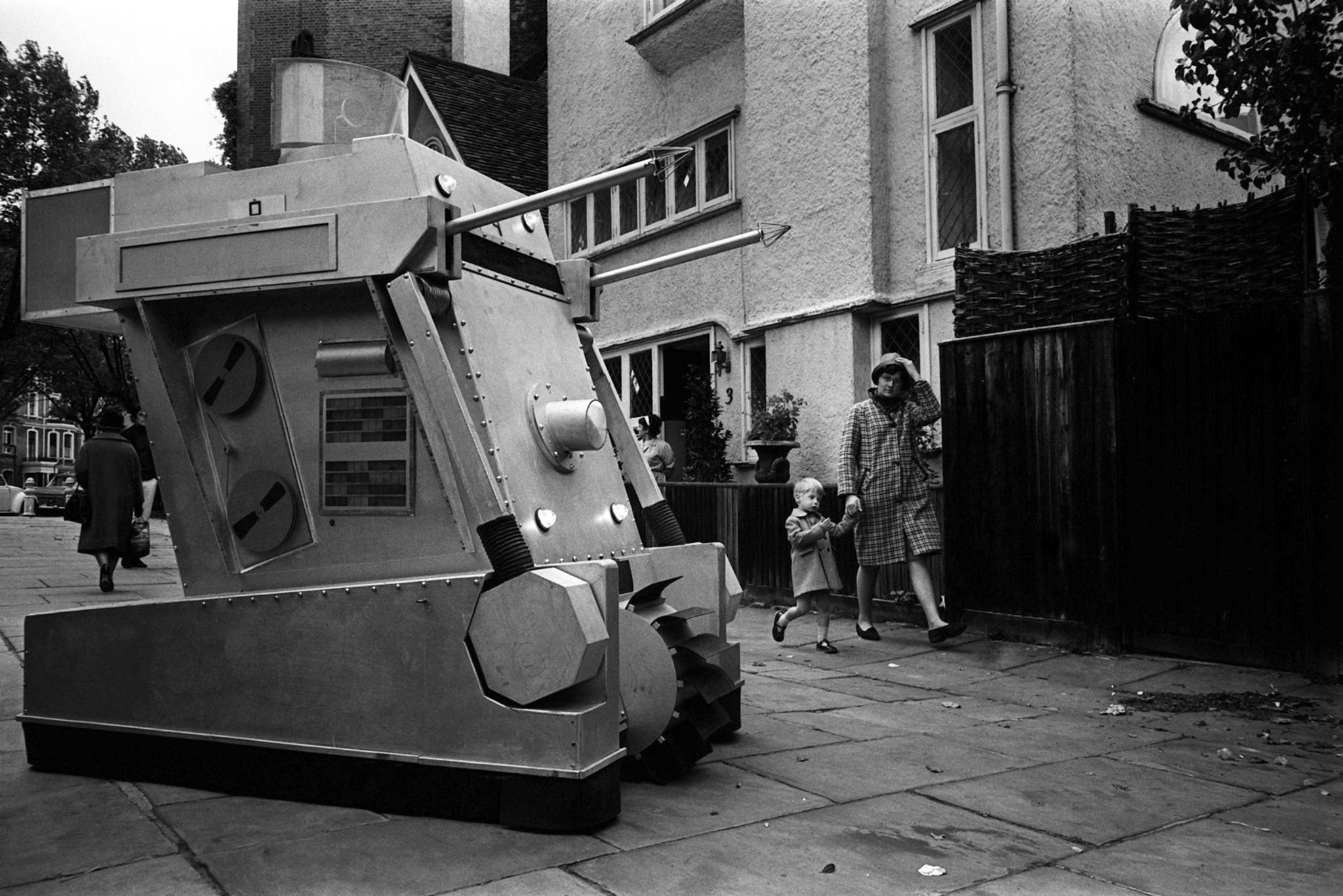
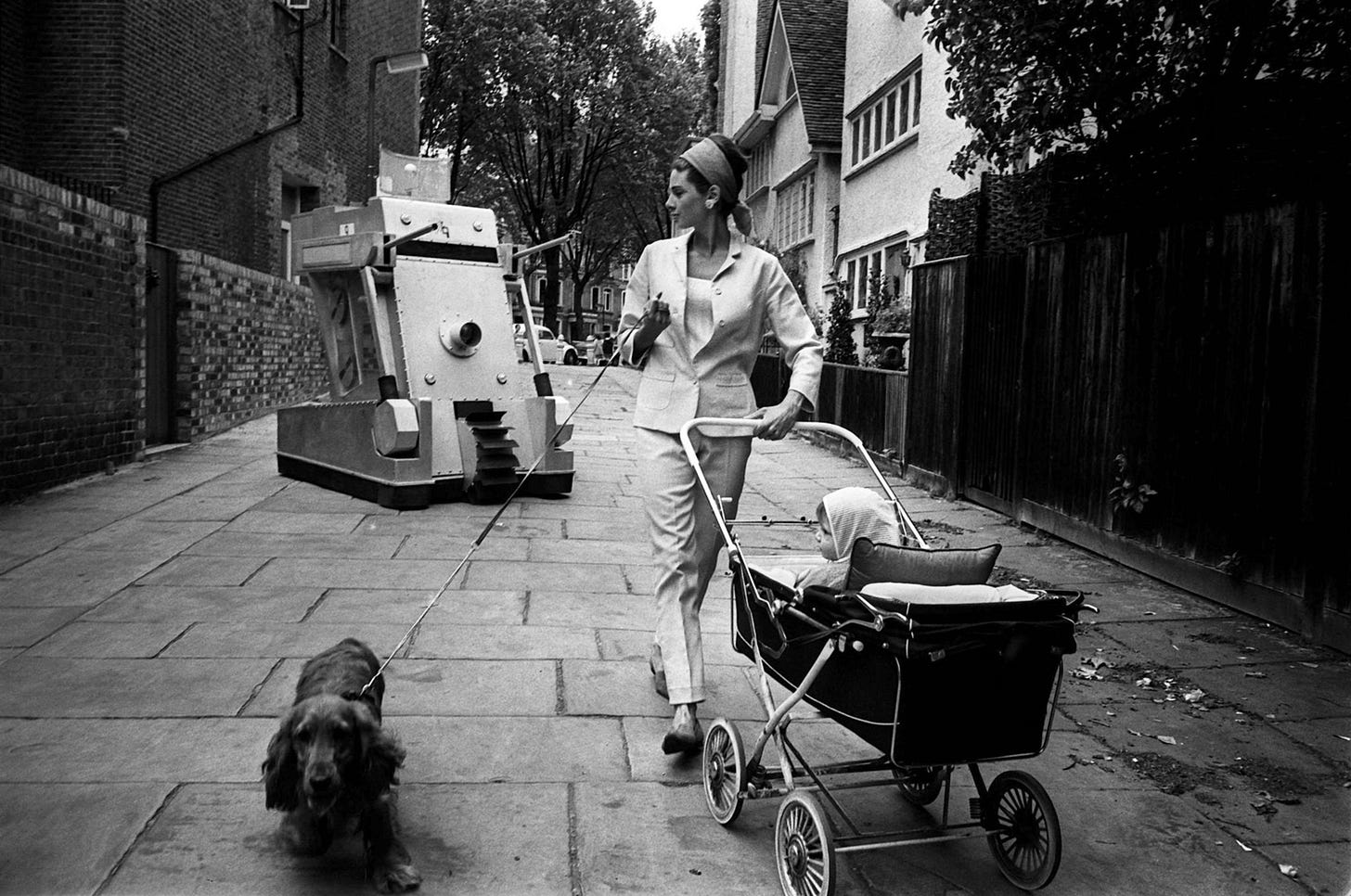
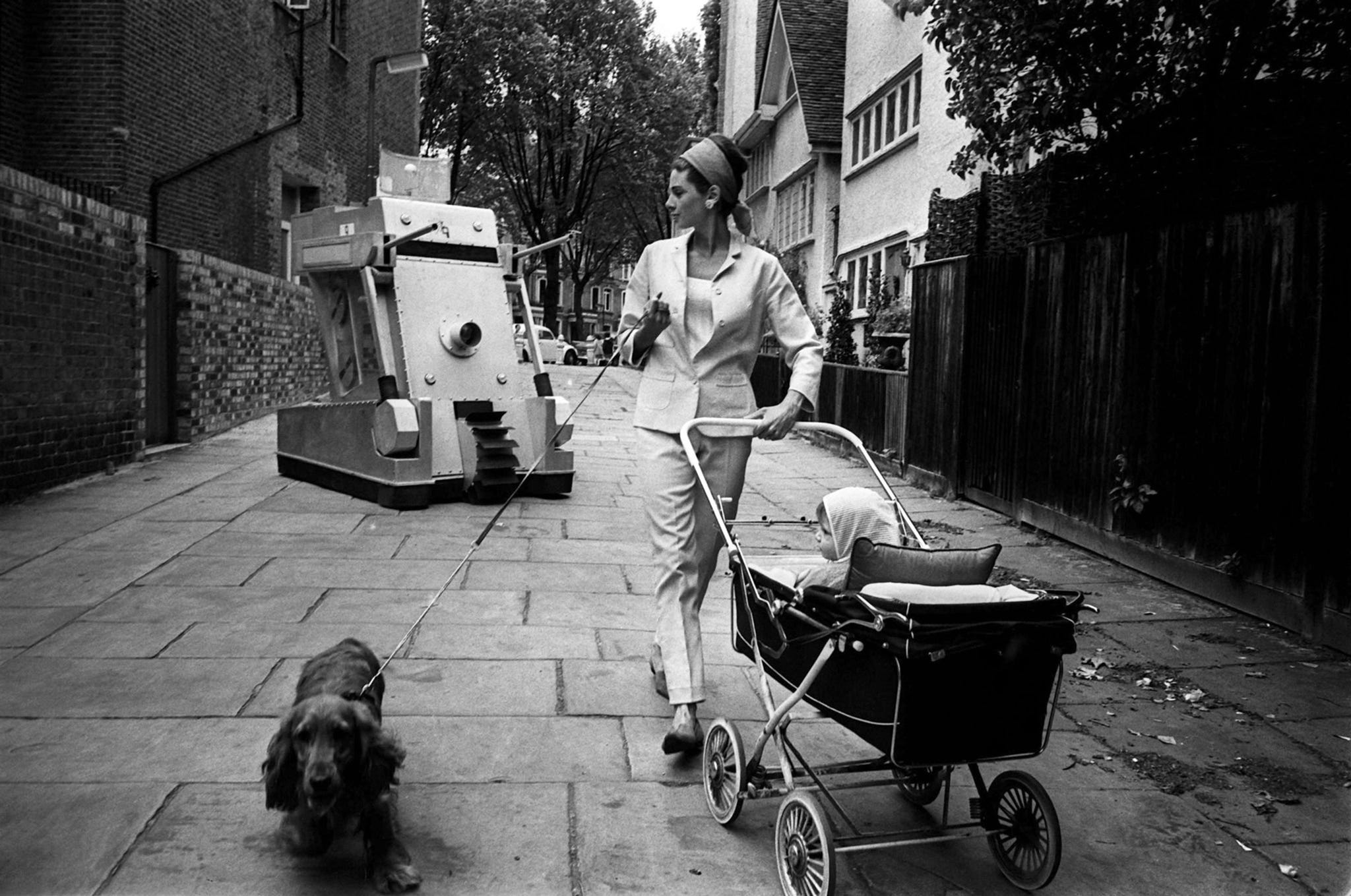
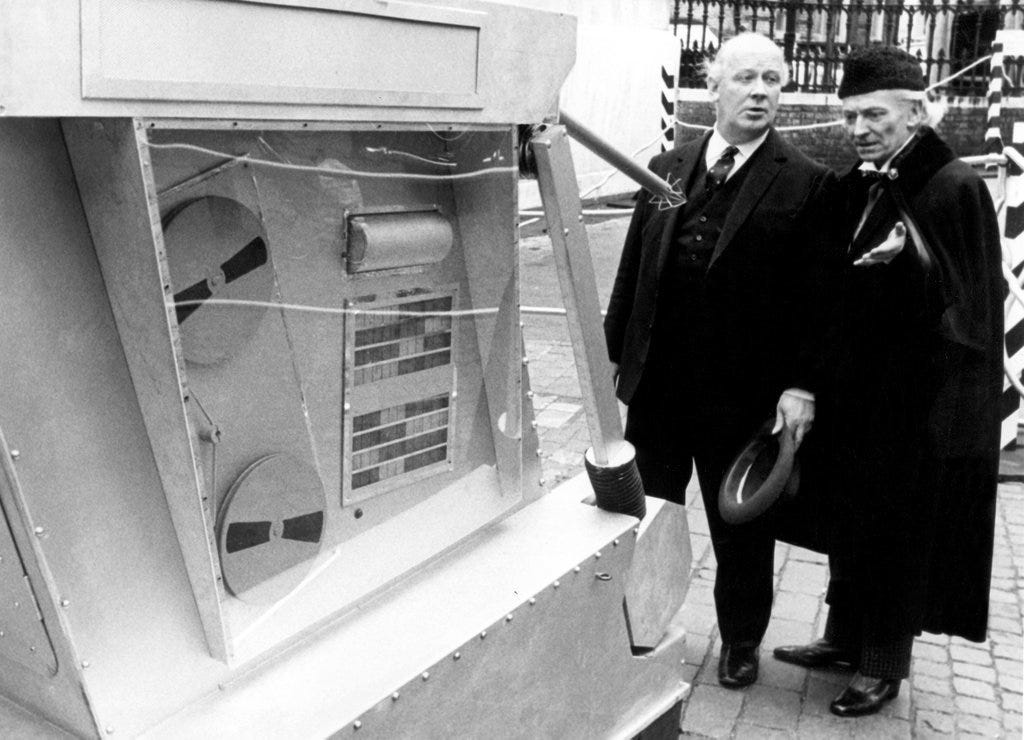
Only one War Machine prop was built.
One of the first stories to use stylized title cards.
The story is deliberately set in modern day because the producers decided the audience was getting bored with historical stories.
The story was one of the last to be destroyed/wiped/junked. It was restored by discovering copies in Nigeria, but they had cuts. The cuts were all partially restored from clip, another copy of episode 2, and minor recreations/edits synced with off-air fan audio recordings.
In Survivors of the Flux, it’s mentioned that UNIT somehow missed “the whole thing at the Post Office Tower,” which led them to appoint “Corporal” Lethbridge-Stewart.
Pete commentary:
The War Machines is quite notable for several reasons, but the most important one is it begins the template of the Doctor interacting “officially” with contemporary Earth. The Doctor isn’t just shrunk and dealing with giant insects, or dealing with some kind of covert invasion on his own. He’s interacting with the authorities, advising them, and even joining forces. This obviously became the template for how he could interact with UNIT, but it’s seen throughout the Troughton era, too (The Faceless Ones, The Web of Fear, Fury from the Deep, and The Invasion).
Moreover, this is Doctor Who catching up to the swinging sixties, with Ben and Polly obviously meant to represent “hip” youngsters at the time: going to discotheques, dancing all night, and generally being shiny, happy people. It’s a shame that Polly, who is really strong in the first half, spends the second half hypnotized.
It’s never fully explained how Brett and Major Green know who the Doctor is. Or WOTAN for that matter. In the novelization, it’s explained that Ian Chesterton was involved in the design and building of WOTAN, or at least some foundational aspects to it, and Ian told others about the Doctor.
This might also explain why WOTAN refers to the Doctor as “Doctor Who,” since Ian was the very first person to utter the phrase in the series (perhaps he needed a placeholder name in official documentation and thought it was apt). Strangely, however, the novel “corrects” this and has WOTAN call him the Doctor.
The Doctor testing WOTAN by asking it to solve for the square root of a not-even-very-high number is laughable. Any computer since ENIAC would be able to do that. Today, ChatGPT can consider highly complex strategic decisions that challenge even PhD level humans, and it’s not even 60 years later (handful of heartbeats to a Time Lord).
How does WOTAN know what TARDIS stands for? (Ian again, probably.)
It’s a bit sinister that WOTAN wants to take over the Doctor (“Doctor Who is required”) but it seems to promptly forget that it said it was “top priority” after the War Machines go into production. Once it’s clear Dodo has failed, why wouldn’t they keep trying?
Sir Charles ends up being the main authority figure the Doctor interacts with, so it’s a shame he’s such a stuffy guy who has no chemistry with the Doctor. I really like how the Doctor acknowledges they need him (“We need Sir Charles’ authority, his help. Without this we can do nothing.”), but looking back you sure miss the Brigadier.
Cool how Downing Street is mentioned—let’s you know the scale of the threat. The show wouldn’t pay off this line until Aliens of London in 2005.
It really sucks that Jackie Lane never got a proper leaving scene for Dodo. Subsequent media (Who Killed Kennedy mostly) have given the character more closure, but it would be good to unpack a bit more why she left in this way. I like to think she knew that if she went to the Doctor personally, she would be tempted to go with him again, but she wanted a normal life, and there was no guarantee she would ever get back to London.
Episode 1 pushes the bounds of realism not by a sentient computer almost plotting to take over the world, but by showing a press conference where officials openly talk about problems: “Perhaps there is something wrong with WOTAN….” I know he’s talking to the Doctor in that moment, but he says it openly in the room. Also, he makes no attempt to paper over Brett’s crazy behavior.
How WOTAN physically gets anything done is a bit unclear. It hypnotizes people via sound, it looks like, since it can do it through the phones. OK, I guess, but it does suggest there is some kind of audio signal that takes over the human mind that theoretically anyone could use, if they can just find it. At least with the Master you can argue he has a kind of psionic ability that gives him a special edge. But WOTAN is just a human-built computer, at least as far as we know.
Also, how exactly does it jam all those guns? Guns are entirely mechanical—there is no “receiver” in them to be taken over. The only thing that makes sense is the War Machines would need to use some kind of powerful and precise magnetic field. I’ll buy it, since it makes them quite formidable.
The War Machines themselves are a bit too boxy to be taken seriously. Their primary threat to London seems to be knocking over all the milk crates and trash cans. “Surrender now, humans, or you’ll have one hell of a mess to clean up!”
The War Machine guns borrow heavily from the Dalek guns in the Peter Cushing movies. I don’t love it, mostly because it’s never explained how they work. Are they gas? Or is the gas meant as a stand-in for an energy weapon (which is generally how they’re depicted in the Dalek movies)? I’d like to think the latter, but there are scenes where there’s a bunch of smoke floating about.
It’s a little vague how the first War Machine’s incomplete programming enabled the Doctor to shut it down (or did it shut down on its own?). Still, it’s fine. The better scene is when they disable the second machine with a magnetic field, but wow did they get lucky that a second machine went haywire!
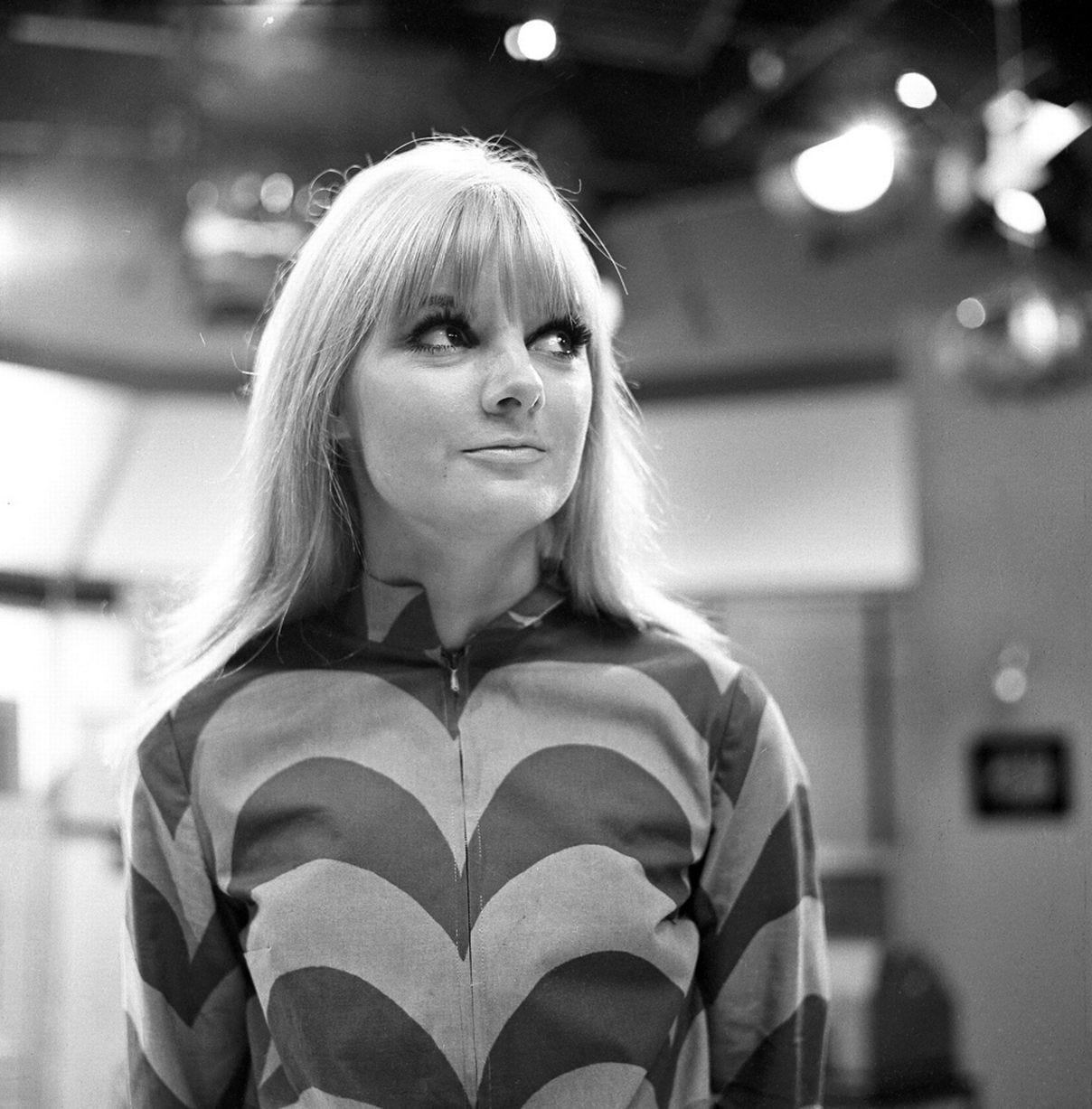
Polly makes a great first impression. It’s awesome how proactive she is when looking to find Dodo, and she is clearly a smart, confident ’60s lady. Yes, she’s a secretary, but she doesn’t let that fact diminish her—she speaks to her male colleagues (and even her superiors) as an equal.
Sad indicator of real-world sexism: Anneke Wills is way down the credits, after much of the male guest cast, even though Michael Craze is right after Dodo.
You’re struck by how “innocent” the interactions between Ben and Polly are, with Ben not thinking to make a play for her, even after smacking around Flash (love the name). True, they’re not given much time to pursue their attraction to each other, but there’s barely a whiff of romance. In modern Who, they would completely zero in on the sexual tension.
Speaking of Flash, doesn’t the Inferno have a bouncer? Or did those come later?
Ben being assigned to barracks for 6 months is a fine setup for his character, and is thus aptly whisked away by the Doctor, but that just seems like a weird thing to happen to someone who joined the navy specifically to see the world.
Why does the team building the War Machine kill the tramp instead of “converting” him? And once Polly persuades them not to kill Ben, why not convert him too?
And the tramp’s death is written up in a paper within hours?
At the end of episode 2, it’s a bit unclear whether the War Machine is just knocking things around or deliberately looking for Ben.
How is it the people in the warehouse haven’t noticed the army encircling the building? WOTAN is not so good at the security.
End of episode 3 is pretty cool. Love seeing the Doctor defiant as everyone retreats.
I get that the crisis is big and it needs to be top priority. But the Doctor dismissing Ben’s concerns about Polly is somewhat out of character for him, even for the First Doctor. And it’s a good thing Ben was proactive here—it he hadn’t physically taken Polly out of the WOTAN room, she might have ended up like Krimpton.
Speaking of, that’s another problem with the Doctor’s plan—it involved the murder of someone. You could argue it was necessary, but I would have liked to see more compassion from the Doctor other than, “There’s nothing you can do for the poor fellow.” It’s also ironic considering the Doctor’s (contrived) line criticizing Sir Charles for his “strong-arm tactics.”
The magnet solution is great, though I don’t get why the machine was still moving while it was in the perimeter. NuWho would have had the perimeter much larger.
There’s not much in the way of a soundtrack to this one, which would continue with The Smugglers. Obviously, incidental music was not a priority for this production team, which led to a lot of oppressive computer noises throughout.
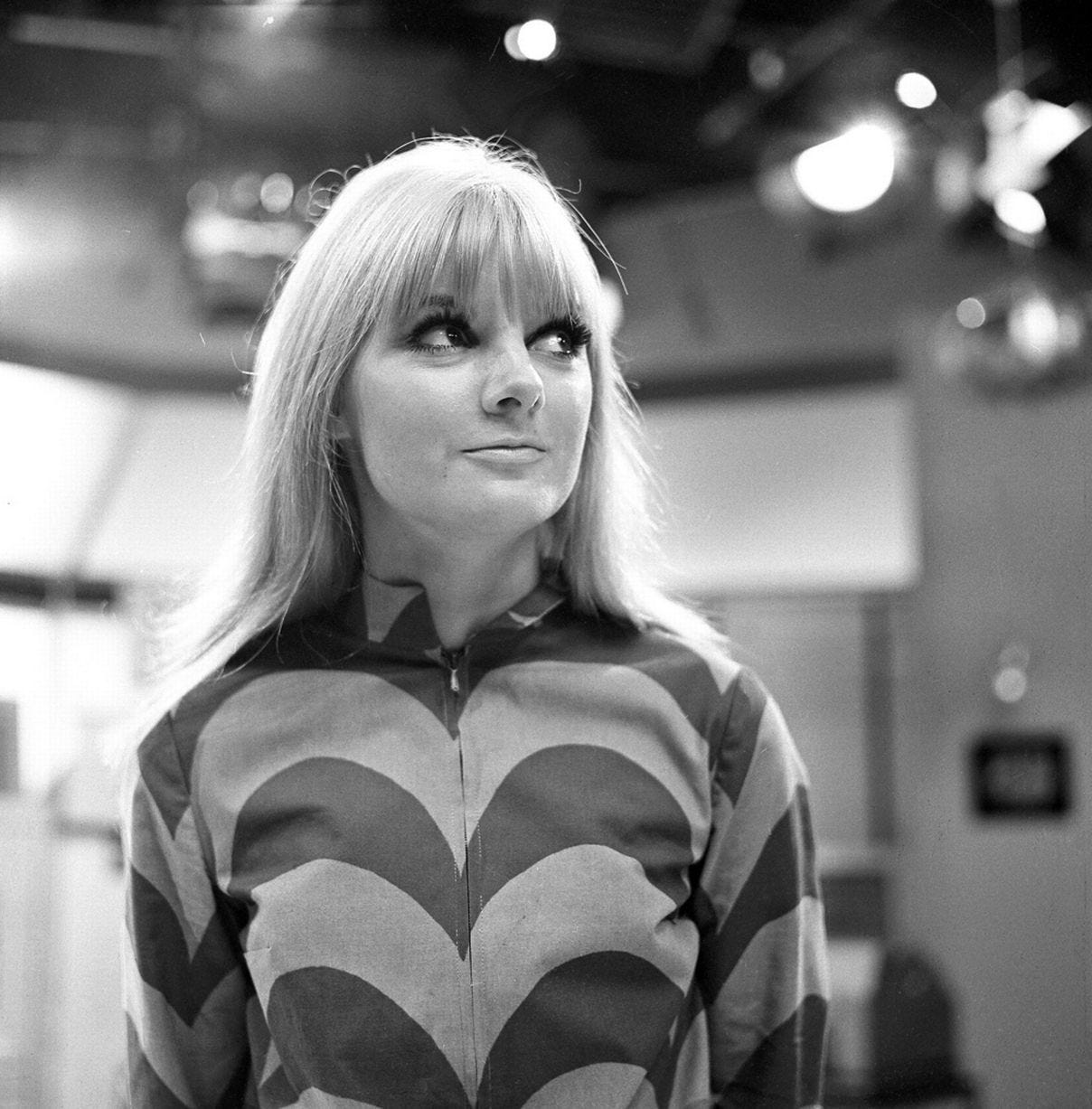
What did Pete’s family think?
Grace thought it was “weird.” She also questioned why anyone would be at a club like the Inferno during the day (maybe it’s summer).
Four Questions to Doomsday - Pete
Why did the Randomizer take us here? Taking over a key city as the first step of a larger invasion definitely echoes Daleks in Manhattan. And in both a romance (Tallulah/Laszlo, Polly/Ben) factors heavily into the plot. Polly must be secretly longing for Ben given that her affection shines through WOTAN’s programming, which seems to have no trouble turning regular people into merciless killers.
What if the evil plot had succeeded? I don’t see how WOTAN could conquer a bouncy house let alone a city. Still, to take the question seriously, someone mentions the War Machines are impervious to grenades, and you have to imagine its weapons are, in reality, more effective than they’re depicted. Couple that with the ability to jam mechanical weapons, and you’ve got a serious problem on your hands.
You have to imagine the Doctor’s War Machine falls over or something, so they can’t get to the tower in time. The other War Machines deploy at noon, and over the next couple of days they kill many thousands before the military can get enough of the population evacuated to really respond. By the time the authorities can authorize an air strike, WOTAN has built its own drones. With air superiority and the ability to mechanically jam most weapons, WOTAN quickly takes over London. Simultaneously, it uses phone lines to initiate similar campaigns in all the cities it mentioned.
Earth’s in a real pickle! The Doctor would need to perhaps summon help (the Daleks, perhaps, a la Revolution?) to fight off WOTAN’s new army of War Machines, built and maintained by a hypnotized workforce. Polly’s resistance hints at a possible wide-scale solution to free the humans of its control.
Where’s the Clara splinter? Convincing Dodo to not go back to the Doctor because she’ll want to keep traveling with him if she goes. Clara knows Dodo needs to live to experience the events of Who Killed Kennedy.
Dalek, Ogron, Professor Hayter, Viscount Banger, Fixed Point in Time, Lady Cassandra, or Zarbi? Fixed Point in Time. Super important episode for Doctor Who, establishing how the Doctor—and the show—deal with modern day. It’s too bad the War Machines aren’t great as a monster or prop, and by the end, even though we’re told 10 more have been deactivated, we have no interest in seeing them again. Still, the overall story holds up, even if many of the details look pretty silly today.
Hey, great read as always, this early take on AI taking over is so fascinating and truly set a significant precedent for sci-fi.